



Choosing skincare can feel overwhelming when every product promises glowing, firm or younger looking skin. Many people buy moisturisers, serums and cleansers based on pretty packaging or big claims, but the real results come from understanding the ingredients inside. You do not need a science degree to make sense of a label. With a little guidance and a few simple habits, you can learn how ingredients work and which formulas are worth adding to your routine.
Below is a clear and practical guide that explains key ingredients, how to check concentration levels and how to choose products that genuinely support your skin needs.
Start With Your Skin Concerns
Before looking at any ingredient list, know exactly what your skin needs. Clear goals make the choice easier.
Common concerns include
• Dryness
• Breakouts
• Fine lines
• Uneven tone
• Redness or sensitivity
• Dullness
• Dark spots
Once you know your top concern, it becomes easier to find ingredients that match it. For example, if your main issue is breakouts, ingredients like salicylic acid or niacinamide are more useful than a heavy moisturising cream. If your skin feels tight or flaky, hydrating ingredients like hyaluronic acid or glycerin are more valuable.
Learn The Most Useful Ingredients
You will often hear the same few skincare ingredients recommended again and again because they are proven to work. Below are some of the most effective ones and what they do.
Hyaluronic Acid
A hydrating ingredient that helps the skin hold on to water. It is great for dryness and dullness. It works well in serums and moisturisers and suits almost every skin type, even oily or sensitive skin.
Vitamin C
A brightening antioxidant that helps with dark spots and uneven tone. It can also support skin against environmental damage. If your skin is sensitive, choose a gentle form such as sodium ascorbyl phosphate rather than the strong pure version.
Niacinamide
A calming and balancing ingredient that helps reduce redness, control oil and smooth texture. It is one of the most beginner friendly options and mixes well with most other ingredients.
Retinol
One of the most researched anti ageing ingredients. It supports cell turnover and improves the look of lines, pigmentation and uneven texture. Start slowly because it can be strong for new users.
Salicylic Acid
A beta hydroxy acid that helps unclog pores and reduce breakouts. It works well for oily and acne prone skin.
Ceramides
These help strengthen your skin barrier which keeps moisture in and irritants out. If your skin often feels sore or tight, ceramides are essential.
Peptides
Support firmness and skin repair. They are gentle and suitable for daily use.
Check Ingredient Order On The Label
Skincare products list ingredients from the highest amount to the lowest. This is a simple but powerful clue. If the main active ingredient is far down the list, the product may not contain enough to make a noticeable difference.
Here are quick tips
• If hyaluronic acid or niacinamide is within the first five to eight ingredients, it is likely present in a useful amount
• If retinol appears near the bottom of the list, it may be too low to work properly
• Fragrance should be at the bottom of the list to reduce the chance of irritation
You do not need to know every single chemical name. Focus on the position of the key ingredients instead of trying to memorise the whole list.
Know The Right Strengths

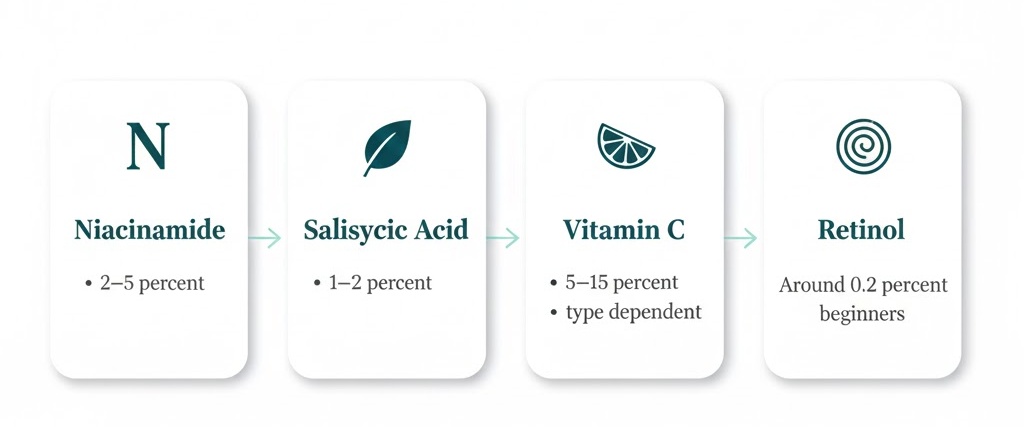
Some ingredients need to be in the correct concentration to be effective. These ranges are helpful guides.
• Niacinamide works well between two and five percent
• Salicylic acid is usually effective at one or two percent
• Vitamin C can be effective between five and fifteen percent depending on the type
• Retinol starts working at around 0 point 2 percent for beginners
If a product hides the percentage, do not worry. Brands that use meaningful levels usually highlight them. If there is no clear information anywhere, it may be a sign that the strength is low.
Avoid Too Many Strong Ingredients At Once
Many people damage their skin barrier by mixing strong ingredients without knowing how they interact. You do not need to use everything. A simple routine often works better.
Here are safe combinations
• Niacinamide with almost anything
• Hyaluronic acid with any hydrating product
• Vitamin C in the morning followed by sunscreen
• Retinol at night on clean dry skin
Combinations to avoid if you are new
• Retinol with strong exfoliating acids
• Vitamin C with high strength acids
• More than one strong active in the same routine
If you want to try stronger products, add them slowly and watch how your skin reacts.
Choose The Right Texture For Your Skin
Even effective ingredients fail when the texture does not suit your skin type.
• Oily skin benefits from light gels and water based serums
• Dry skin needs richer creams and hydrating serums
• Sensitive skin often prefers fragrance free formulas and soothing textures
• Combination skin can use lighter textures during the day and richer ones at night
Texture matters because it affects how well a product absorbs and how comfortable it feels on the skin.
Check For Irritants That Affect You
Not every irritant harms everyone, but some people react to certain ingredients. If you have sensitive skin, look out for these.
• Strong fragrance
• Essential oils
• High strength alcohol in toners
• Strong acids in daily products
If your skin often stings or turns red, switch to products with simple ingredient lists and soothing ingredients such as aloe, oat extract or ceramides.
Patch Test Before Trying Something New
A patch test helps you avoid full face reactions. Apply a small amount of the new product to the side of your jaw or behind your ear. Wait twenty four hours. If there is no redness or itching, it is likely safe for you.
This step sounds small, but it can save you from irritation and wasted money.
Build A Simple And Effective Routine

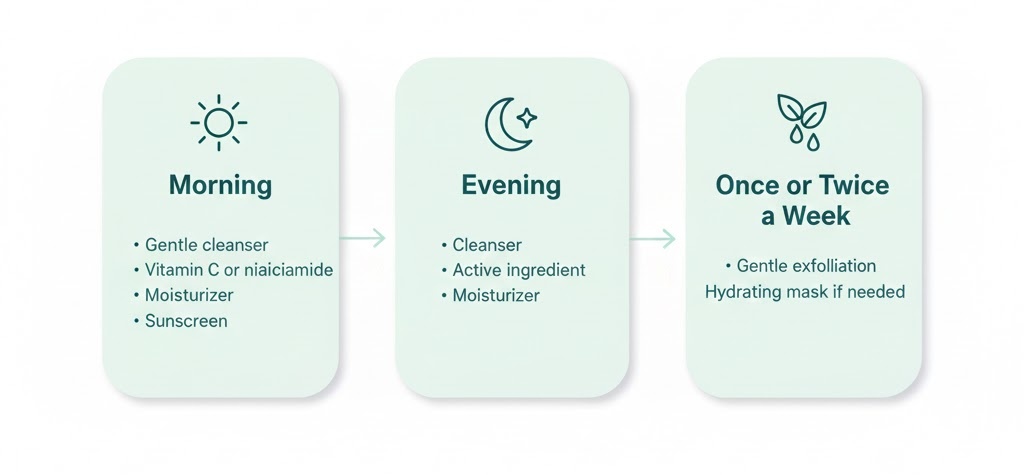
A good routine does not need to be complicated. Follow this basic structure and adjust based on your skin needs.
Morning
• Gentle cleanser
• Vitamin C or niacinamide
• Moisturiser
• Sunscreen
Evening
• Cleanser
• Active ingredient based on your main concern
• Moisturiser
Once or twice a week
• Gentle exfoliation
• Hydrating mask if needed
Focus on consistency rather than chasing the newest trend.
Final Thoughts
Understanding skincare ingredients is the most reliable way to choose formulas that genuinely work. When you know what key ingredients do and how to read the label, you can ignore marketing claims and focus on what matters. A simple routine built on the right ingredients can give you clearer, calmer and healthier looking skin without confusion or overspending.