


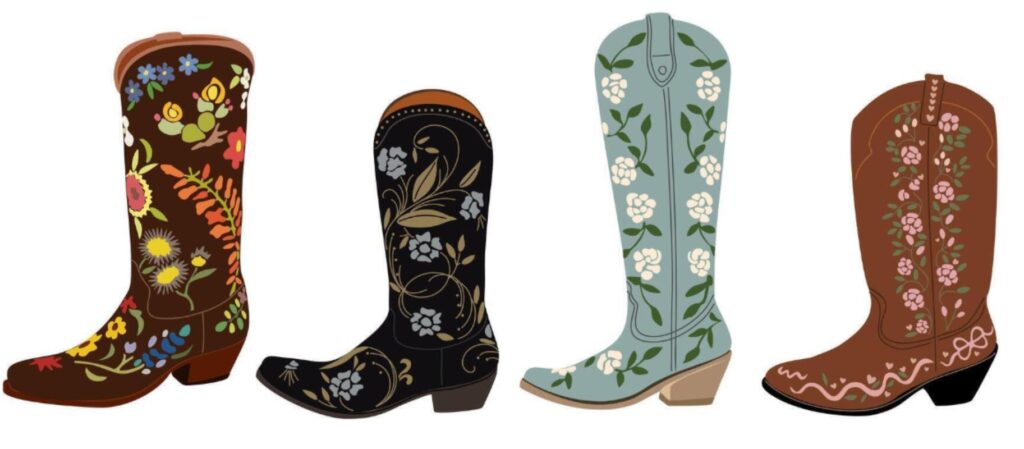
The right cowgirl boots, with the correct heel height and angular profile, provide adequate structure and support, enabling easier movement when saddling horses. They offer traction to stop your foot from slipping through the stirrup; this allows you to maintain balance and control while riding over uneven terrain. Here are a few types of boots that can suit your cowgirl lifestyle:
Traditional Western Riding Boots
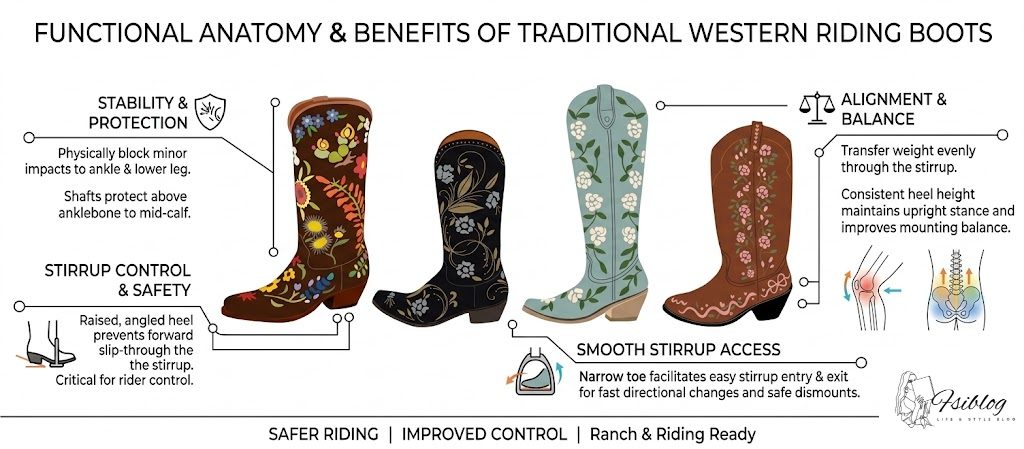
Traditional western riding boots are ideal options because of the stability they provide to the ankle and lower leg while in the saddle. Their high shafts extend above the ankle bone and often to the mid-calf. This helps to physically block minor impacts that may result when riding and ranching. Some also feature raised, slightly angled heels, and this helps prevent the sole from slipping forward through the stirrup. With a consistent heel height, the boots allow cowgirls to maintain an upright stance while also improving mounting and riding balance.
Western cowgirl boots may enhance alignment that transfers your weight through the stirrup more evenly. This helps protect the knees and lower back from straining during repeated mounting, dismounting, or riding on sloped ground. Some of these boots also feature narrow toe profiles that promote smooth sliding in and out of the stirrups. When stirrup access is smooth, cowgirls are able to handle fast directional changes and dismounts with better control; riding and ranching can become safer as a result.
Roper Style Cowgirl Boots
Roper-style boots may feature a shorter shaft that allows for more ankle freedom and flexibility. Their rounded toe shape provides the forefoot with more space. The space may prevent possible compressing of the toes, so you benefit from consistent comfort during long riding or ranching sessions. Many of these boots also feature short, square heels that help secure them in the stirrup, minimizing possible ankle twisting during dismounting.
Lined Boots
Lined cowgirl boots provide warmth because of their lightweight thermal insulation properties. They may trap the heat produced by the body; this helps protect the feet from stiffening on frozen ground during prolonged riding and ranching. Some of these boots also have a lined shaft that wraps around the calf and the ankle. This helps limit lateral movement during long-haul riding, and it allows for adequate stability and flexibility when mounting and dismounting. The soft internal lining of the shaft can minimize abrasive contact points at the heel, ankle, and calf during repeated riding and ranch tasks.
Because of the boots’ lined interior, you might experience less internal seam pressure when ranching on uneven terrain. Seam pressure gets distributed more evenly across the foot and ankle, and this helps minimize discomfort while promoting pain-free saddle time. Lined boots can be more compatible with a wide range of ranch-style clothing and gear. Some are designed to work with chaps, jeans, and riding pants; this may allow you to tuck pants into the shaft without bulky bunching. The compatibility helps to minimize rubbing and also maintains a smooth leg-to-horse interface.
Square-Toe Work Boots
Square-toe boots are ideal for cowgirls with wider feet because of their broad forefoot design. They also accommodate thicker or heavier socks that provide moisture control and insulation when riding and ranching. Many of these boots feature reinforced welt systems, so they are able to resist fast wear that may result from abrasive surfaces during repetitive ranch movements.
Elevate Your Cowgirl Lifestyle Today
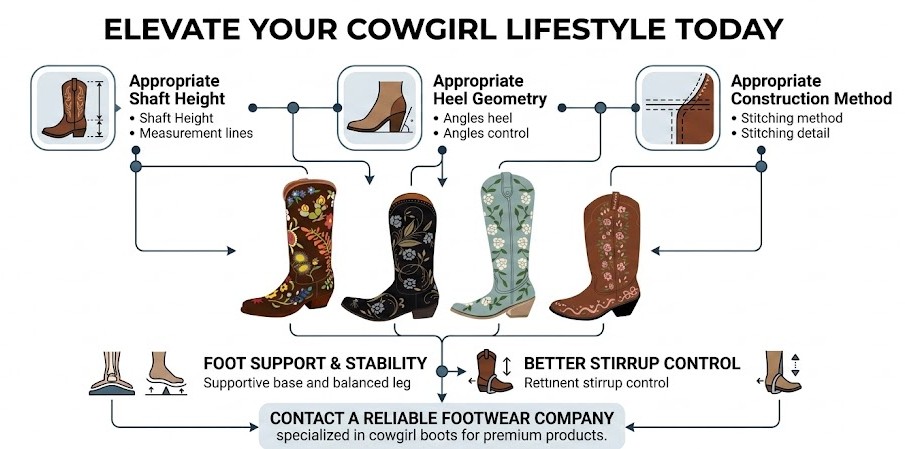
The right boots for your cowgirl lifestyle should feature appropriate shaft height, heel geometry, and construction method to suit routine riding and ranch tasks. These features help maintain foot support and stability, and it also enables cowgirls to maintain better stirrup control. Contact a reliable footwear company that specializes in cowgirl boots for premium products.
Final Consideration
Choosing the right cowgirl boots depends on how often you ride, the type of ranch work you do, and the level of support your feet need throughout the day. Traditional western riding boots, roper boots, lined boots, and square-toe work boots each offer different advantages for comfort, protection, and control. Features such as heel height, shaft support, toe shape, lining, and sole construction can affect how well the boots perform in the saddle and on the ground.
A well-selected pair of cowgirl boots should support steady movement, improve stirrup security, and reduce discomfort during long riding or ranching sessions. Before buying, review the boot materials, fit, sole grip, and intended use to make sure the pair matches your daily lifestyle. Working with a trusted footwear provider can help you find boots that combine durability, comfort, and western style.