


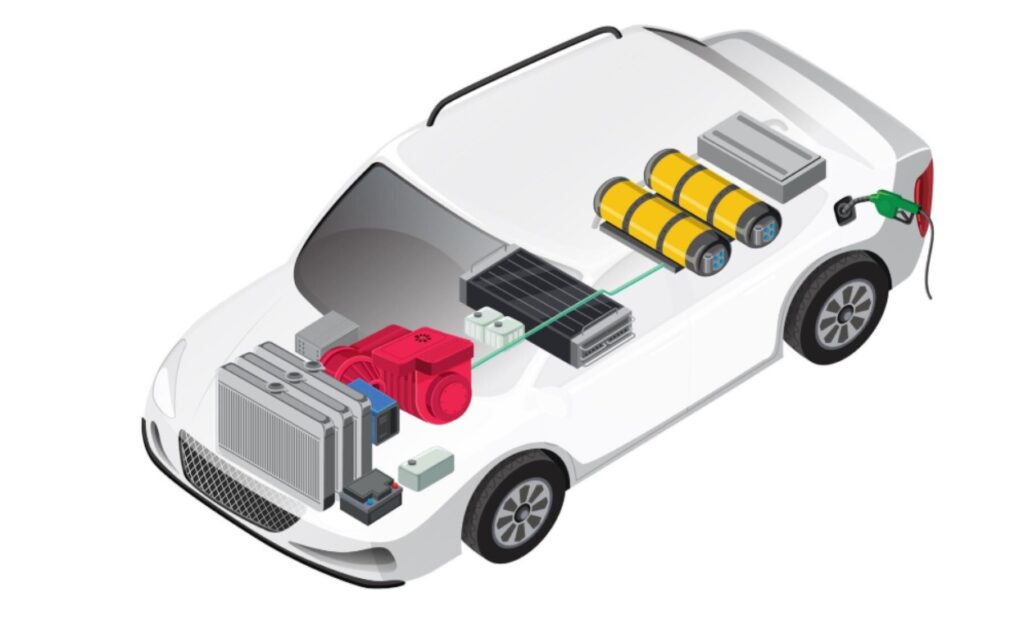
Car batteries are easy to ignore until the morning your car will not start. Most drivers only think about the battery when the engine struggles, the dashboard lights flicker, or a warning light appears at the worst possible time. Yet behind that ordinary box under the bonnet, or the larger battery pack inside an electric vehicle, there is a lot of change happening.
Battery technology is now one of the most important parts of the motor industry. It affects how far electric cars can travel, how quickly they can charge, how long vehicles last, and how much waste is created at the end of a battery’s life. In the UK, this matters not only for drivers, but also for jobs, manufacturing, recycling, and the move towards cleaner transport.
The people working on this project are not always household names. They are researchers, engineers, chemists, manufacturers, and safety specialists. Their work may not sound exciting at first, but it is shaping the way people will drive, charge, repair, and replace car batteries in the years ahead.
Why Battery Progress Matters To UK Drivers
For petrol and diesel cars, the standard 12V battery still has a simple but vital job. It helps start the engine and powers important electrical systems. When it becomes weak, the car may struggle to turn over or fail to start at all. RAC guidance on signs your car battery is low explains why slow cranking, dim lights, and electrical problems should not be ignored.
For electric vehicles, the battery is much more than a starter unit. It is the main source of power. Battery size, chemistry, weight, cooling, software, and charging performance all affect the way the vehicle feels in daily use. A better battery can mean more range, shorter charging stops, improved reliability, and a longer usable life.
This is why battery innovation is not just a technical subject for manufacturers. It is something that affects ordinary drivers. If batteries become cheaper, safer, longer-lasting, and easier to recycle, the benefits reach everyone, from families looking at their first electric car to tradespeople relying on vans every day.
UK Push For Better Battery Technology
The UK has been paying serious attention to batteries because they sit at the centre of future transport and energy plans. The government’s UK battery strategy sets out the aim of building a stronger battery supply chain, supporting innovation, and helping the country compete in battery design, manufacturing, and recycling.
That work matters because batteries are not only about cars. They are also used in energy storage, power tools, mobile devices, buses, vans, and industrial equipment. As demand grows, countries that can design and produce better batteries will have an advantage.
The Faraday Institution is one of the key names in UK battery research. It brings together scientists, universities, and industry partners to work on problems such as battery cost, weight, performance, reliability, manufacturing, and end-of-life use. This kind of work is not always visible to the public, but it helps move battery technology from the lab into real vehicles.
What Innovators Are Trying To Improve
Most battery progress is not about one magic breakthrough. It is about improving several things at the same time. Drivers want batteries that charge faster, last longer, work safely in different weather, and do not cost too much to replace. Manufacturers want batteries that are easier to build at scale. Governments and environmental groups want batteries that use materials responsibly and can be recycled properly.
One major area of work is energy density. In simple terms, this means how much energy a battery can store for its size and weight. A lighter battery can help a vehicle travel further or use less energy. Another area is charging speed, because drivers want charging to feel less like a long stop and more like a normal part of a journey.
Battery life is just as important. If a battery can hold its capacity for longer, the vehicle becomes more useful and keeps better value. That also reduces waste, because fewer batteries need replacing early. For people thinking about car battery replacement, the wider lesson is clear: battery health, quality, and correct fitting all matter.
Electric Cars Are Changing The Battery Conversation
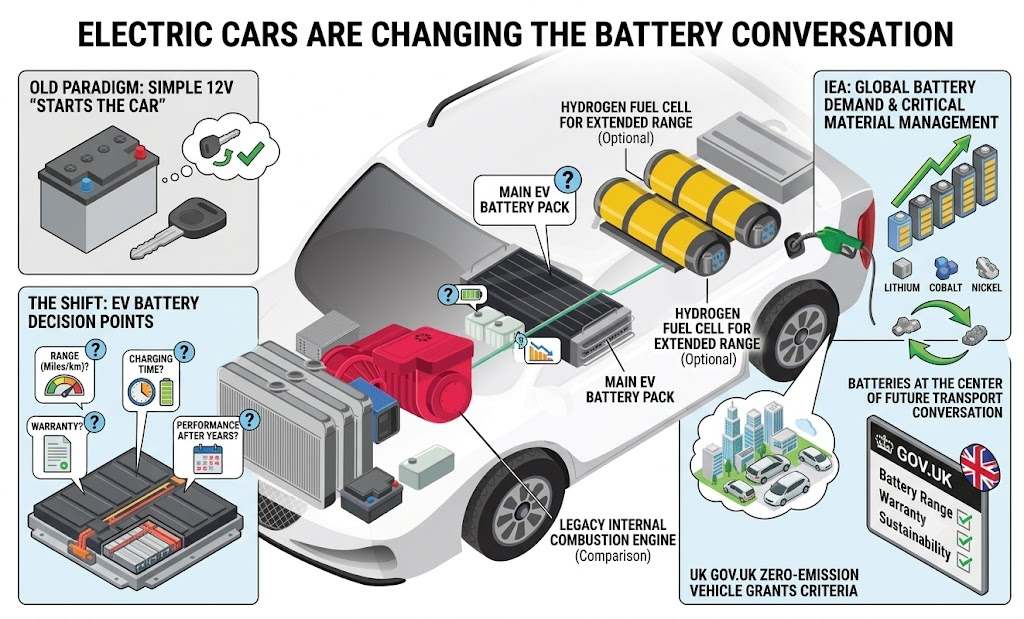
Electric vehicles have made more people aware of battery technology. In the past, many drivers only cared whether a battery could start the car. Now, battery questions are part of buying decisions. People ask about range, charging time, warranty, degradation, and how the battery will perform after several years.
The International Energy Agency’s report on electric vehicle batteries shows how quickly global battery demand has grown as electric cars and energy storage become more common. That demand is pushing companies to improve production, reduce costs, and find better ways to manage critical materials.
In the UK, government support for some zero-emission vehicles also shows how battery performance is becoming part of public policy, the GOV. The UK page on zero-emission vehicle grants includes requirements linked to battery range, warranty, and sustainability criteria for eligible vehicles.
This does not mean every driver is ready to move to an electric car straight away. Cost, charging access, vehicle type, and personal routine still matter. But it does mean batteries are now part of a much bigger conversation about how transport will work in the future.
Safety Still Comes First
Better batteries must also be safer batteries. Any technology that stores energy needs careful design, testing, and handling. For normal drivers, this means using the right battery for the vehicle, getting it fitted properly, and paying attention to warning signs.
With a traditional car battery, problems can show up as slow starting, dim lights, corrosion around the terminals, or repeated need for jump-starting. Ignoring these signs can leave you stranded. With electric vehicles, battery safety is managed through built-in systems, cooling, software, and manufacturer testing. However, owners still need to follow the guidance in the handbook and use approved charging equipment.
Safety also matters at the end of a battery’s life. Batteries should not simply be thrown away. GOV.UK guidance on recycling batteries and electrical waste explains why batteries need proper collection and recycling, rather than being placed in normal household rubbish.
Recycling Is Part Of Real Progress
Battery innovation is not only about making new products. It is also about dealing properly with old ones. A battery contains valuable materials, and some types can be hazardous if handled badly. Recycling helps recover materials and reduces the need to mine everything from scratch.
For vehicle batteries, the rules are more serious than for small household batteries. GOV.UK guidance on waste batteries explains that waste batteries need to be sorted, stored, treated, and recycled under proper controls.
This is where the future of car batteries becomes more practical than glamorous. A cleaner transport system is not only about what happens when a vehicle is new. It is also about what happens after years of use. If batteries can be repaired, reused, repurposed, or recycled more effectively, the whole system becomes more sensible.
What This Means For Ordinary Drivers
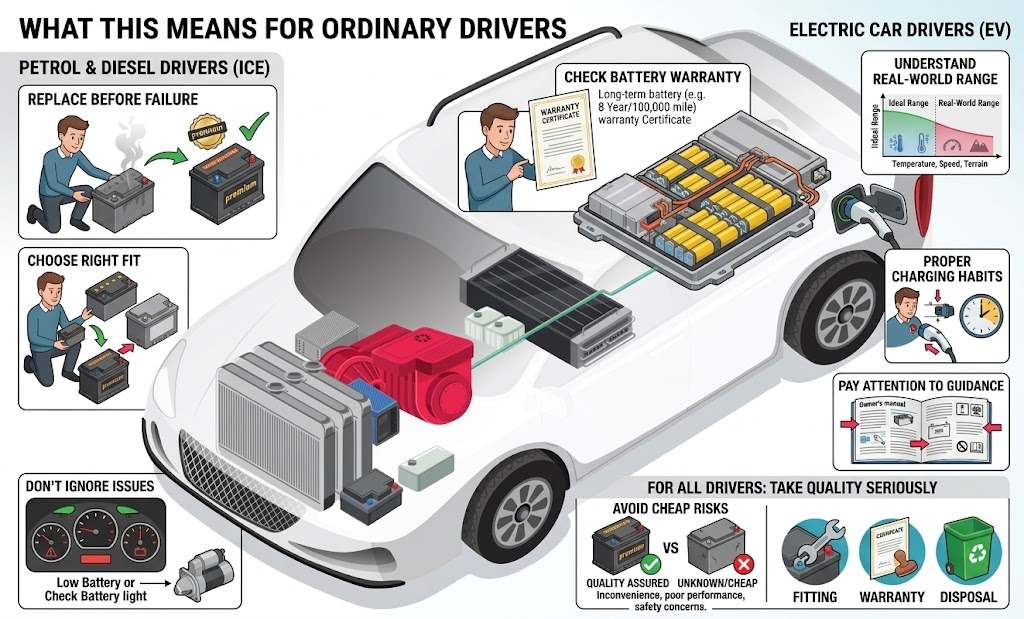
Most drivers do not need to understand battery chemistry in detail. You do not need to know every difference between lithium-ion, lithium iron phosphate, sodium-ion, or solid-state research to make better choices. What matters is knowing that batteries are not all the same, and that quality, fitting, warranty, and disposal are worth taking seriously.
For a petrol or diesel car, that means replacing a weak battery before it fails, choosing a battery that suits the vehicle, and not ignoring starting problems. For an electric car, it means checking the battery warranty, understanding real-world range, using proper charging habits, and paying attention to manufacturer guidance.
It also means being careful with cheap or unknown products. A battery is not the part of a car where you want to take careless risks. A low-quality battery may save money at first, but it can cause inconvenience, poor performance, or safety concerns later.
Final Thoughts
Car battery progress is not happening in one dramatic jump. Many small improvements in research, manufacturing, safety, recycling, and real-world vehicle use are shaping it. The people behind that progress may not be famous, but their work affects how reliable, affordable, and practical future transport becomes.
For UK drivers, the message is simple. Batteries matter more than ever. Whether you drive a petrol car, a diesel van, a hybrid, or a fully electric vehicle, the battery is no longer something to ignore until it fails. It is part of the vehicle’s reliability, cost, safety, and environmental impact.
The real pioneers in this space are not just chasing bigger numbers on a spec sheet. They are trying to make batteries that work better for everyday people, last longer on real roads, and cause less waste when their useful life is over. That is the kind of progress drivers can actually feel.