


Chemotherapy can reduce fluid intake, dry out the skin and mouth, and lower energy levels during treatment cycles. A chemotherapy care package offers practical tools to help manage side effects and support comfort during recovery. It includes items for hygiene, physical comfort, and daily self-care throughout treatment. Here are a few additions to a chemo care package to improve comfort:
Skin and Body Care
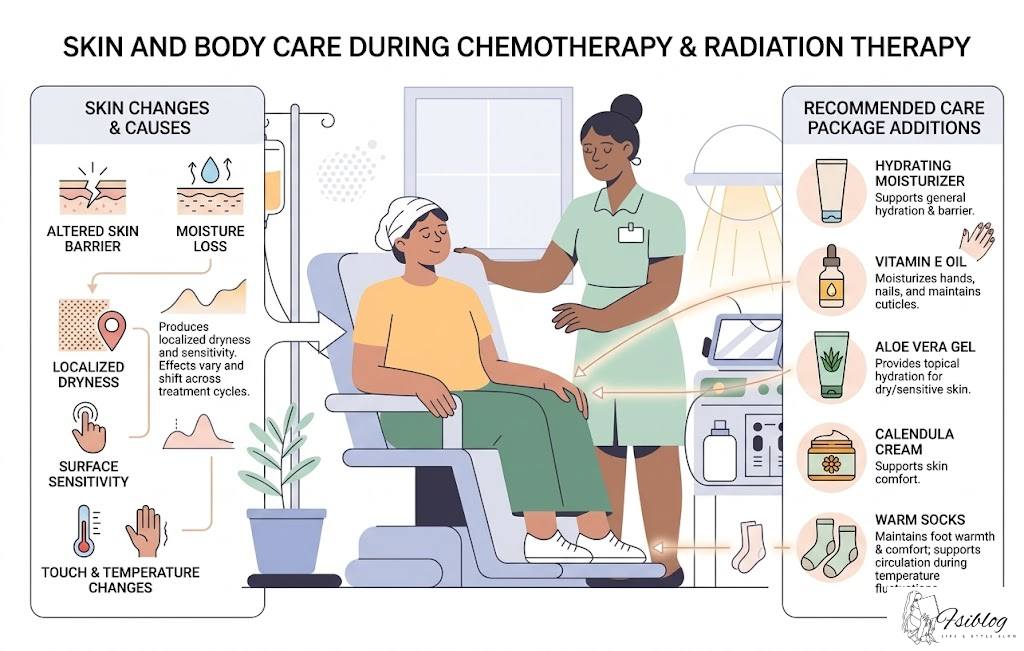
Chemotherapy and radiation therapy alter skin barrier function and affect moisture retention and surface sensitivity. These changes produce localized dryness and change how skin responds to touch and temperature during treatment. The severity and distribution of these effects vary between individuals and shift across treatment cycles.
A chemotherapy care package that includes a moisturizer supports hydration when skin becomes dry or more reactive. Vitamin E oil supports moisture in the hands and nails and helps maintain cuticle and skin condition. Aloe vera gel provides topical hydration for dry or sensitive areas of skin; calendula cream also supports skin comfort. Socks maintain foot warmth and comfort during treatment sessions and rest periods, especially when temperature regulation and circulation fluctuate.
Structured Storage
Treatment schedules involve repeated movement between home, clinics, and recovery settings, along with transporting personal items. A chemo care package with a tote bag organizes treatment items and supports transport between home and clinical visits. When belongings stay grouped in a single container, appointment preparation becomes more efficient. The organization reduces time spent searching for items and limits unnecessary handling during treatment days, and this consistency supports predictable routines across treatment cycles.
Hydration and Oral Comfort
Chemotherapy changes taste perception, saliva production, and hydration balance. Fluid intake varies across treatment cycles, and dry mouth appears at different stages of treatment. These changes affect oral comfort and drinking patterns.
Hydration drops support fluid intake when plain water is difficult to consume during treatment, and tea supports hydration and provides a warm beverage option during rest periods. Sugar-free soft caramels stimulate saliva production and support oral comfort during dry mouth episodes. Lip balm protects lips from dryness and reduces cracking associated with dehydration and reduced saliva flow.
Emotional Support Tools
Journals support reflection, note-taking, and emotional processing during treatment, and they accommodate short writing sessions when energy levels allow. A journal also organizes thoughts and symptoms in one place, which supports communication with care providers. Writing entries across treatment cycles creates a consistent record of experiences and patterns. Brain games books support cognitive engagement through structured puzzles, memory tasks, and attention exercises during periods of low energy. They provide short, contained activities that fit between treatment sessions or rest periods. These activities maintain mental stimulation without requiring extended focus or screen use, and they offer a consistent way to practice problem-solving skills during treatment cycles.
Buy Chemo Care Packages
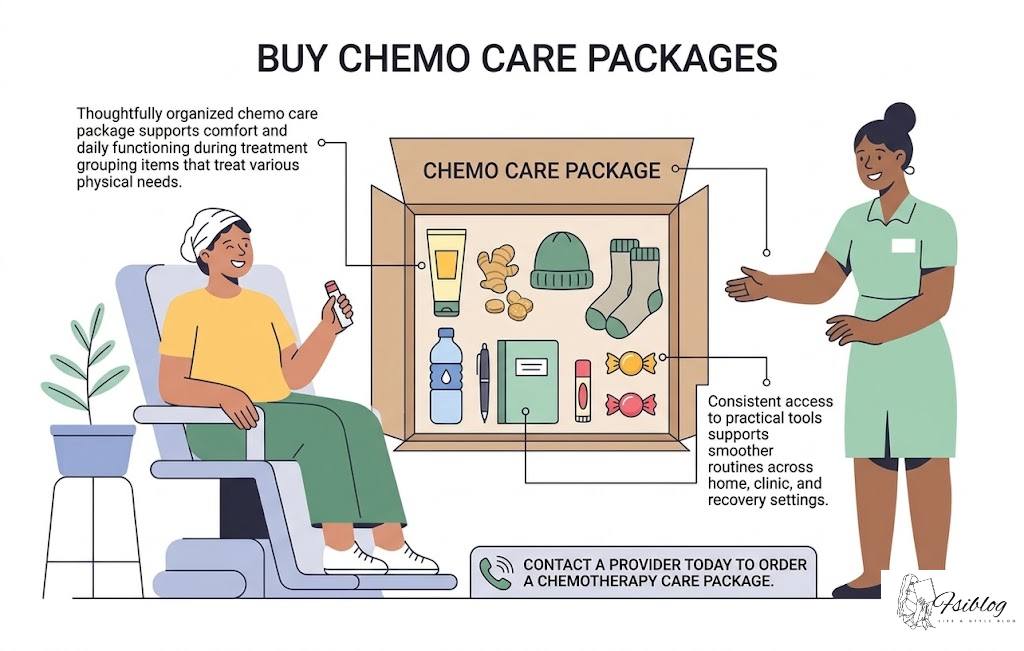
A thoughtfully organized chemo care package supports comfort and daily functioning during treatment by grouping items that treat various physical needs. Consistent access to practical tools supports smoother routines across home, clinic, and recovery settings. Contact a provider today to order a chemotherapy care package.
Final Conclusion
A chemo care package can provide practical comfort during treatment by bringing together items that support skin care, hydration, oral comfort, organization, warmth, and emotional well-being. Simple additions such as moisturizers, lip balm, socks, tea, hydration drops, journals, and puzzle books can help make treatment days and recovery periods more manageable.
The best care packages are thoughtful, practical, and easy to use. They should focus on comfort, gentle self-care, and everyday needs during chemotherapy cycles. Choosing well-organized items that fit the patient’s preferences can make the package more meaningful and useful throughout treatment.
Disclaimer
This information is for general educational purposes only and should not replace medical advice from a licensed healthcare provider. Chemotherapy side effects and care needs vary from person to person. Patients should speak with their oncology team before using new skincare products, supplements, oral care items, herbal teas, or any product that may affect treatment, allergies, or skin sensitivity.
References
- National Cancer Institute. (2024). Chemotherapy and You: Support for People with Cancer. U.S. Department of Health and Human Services, National Institutes of Health, National Cancer Institute. NIH Publication No. 24-7157. Published January 2024.
- American Cancer Society. (2025). Chemotherapy Side Effects. American Cancer Society. Last revised May 15, 2025. Accessed May 31, 2026.
- American Cancer Society. (2024). Mouth Dryness or Thick Saliva. American Cancer Society. Last revised June 26, 2024. Accessed May 31, 2026.
- Memorial Sloan Kettering Cancer Center. (2024). How To Care for Your Skin During Radiation Therapy. Memorial Sloan Kettering Cancer Center. Last updated April 30, 2024. Accessed May 31, 2026.
- Memorial Sloan Kettering Cancer Center. (n.d.). Managing Your Chemotherapy Side Effects. Memorial Sloan Kettering Cancer Center. Accessed May 31, 2026.
- City of Hope. (2021). What You Need for a Chemotherapy Care Kit. City of Hope Orange County. Published June 9, 2021. Accessed May 31, 2026.
- UCSF Health. (n.d.). Coping with Chemotherapy. University of California, San Francisco Health. Accessed May 31, 2026.
- Kang, D., Kim, N., Im, Y. H., Park, Y. H., Kim, J. Y., Park, H., Kim, E., Zhao, D., Guallar, E., Ahn, J. S., & Cho, J. (2022). Efficacy of a tailored moisturizer for reducing chemotherapy-induced skin dryness in breast cancer patients: A randomized controlled clinical trial. Journal of the American Academy of Dermatology, 87(4), 858–860. doi: 10.1016/j.jaad.2021.10.047
- Fabi, A., Bhargava, R., Fatigoni, S., Guglielmo, M., Horneber, M., Roila, F., Weis, J., Jordan, K., & Ripamonti, C. I. (2020). Cancer-related fatigue: ESMO Clinical Practice Guidelines for diagnosis and treatment. Annals of Oncology, 31(6), 713–723. doi: 10.1016/j.annonc.2020.02.016
- Elad, S., Cheng, K. K. F., Lalla, R. V., Yarom, N., Hong, C., Logan, R. M., Bowen, J., Gibson, R., Saunders, D. P., Zadik, Y., Ariyawardana, A., Correa, M. E., Ranna, V., & Bossi, P. (2020). MASCC/ISOO clinical practice guidelines for the management of mucositis secondary to cancer therapy. Cancer, 126(19), 4423–4431. doi: 10.1002/cncr.33100
- Berger, A. M., Abernethy, A. P., Atkinson, A., Barsevick, A. M., Breitbart, W. S., Cella, D., Cimprich, B., Cleeland, C., Eisenberger, M. A., Escalante, C. P., Jacobsen, P. B., Kaldor, P., Ligibel, J. A., Murphy, B. A., O’Connor, T., Pirl, W. F., Rodler, E., Rugo, H. S., Thomas, J., & Wagner, L. I. (2010). NCCN Clinical Practice Guidelines: Cancer-related fatigue. Journal of the National Comprehensive Cancer Network, 8(8), 904–931.
- Hosseini, M. S., et al. (2024). Cancer treatment-related xerostomia: Basics, therapeutics, and future perspectives. European Journal of Medical Research. Published 2024.