
When I first stepped off the plane in Fort Lauderdale, Florida, United States, the warm sunshine hit my face, and I knew immediately why people call this place the “Venice of America.” The palm trees swayed gently, the air smelled like the ocean and tropical flowers, and I could already hear the distant sound of waves. Let me share everything I’ve learned about this stunning Florida city so you can experience it just like a local.
What Makes Fort Lauderdale, Florida, the United States Special
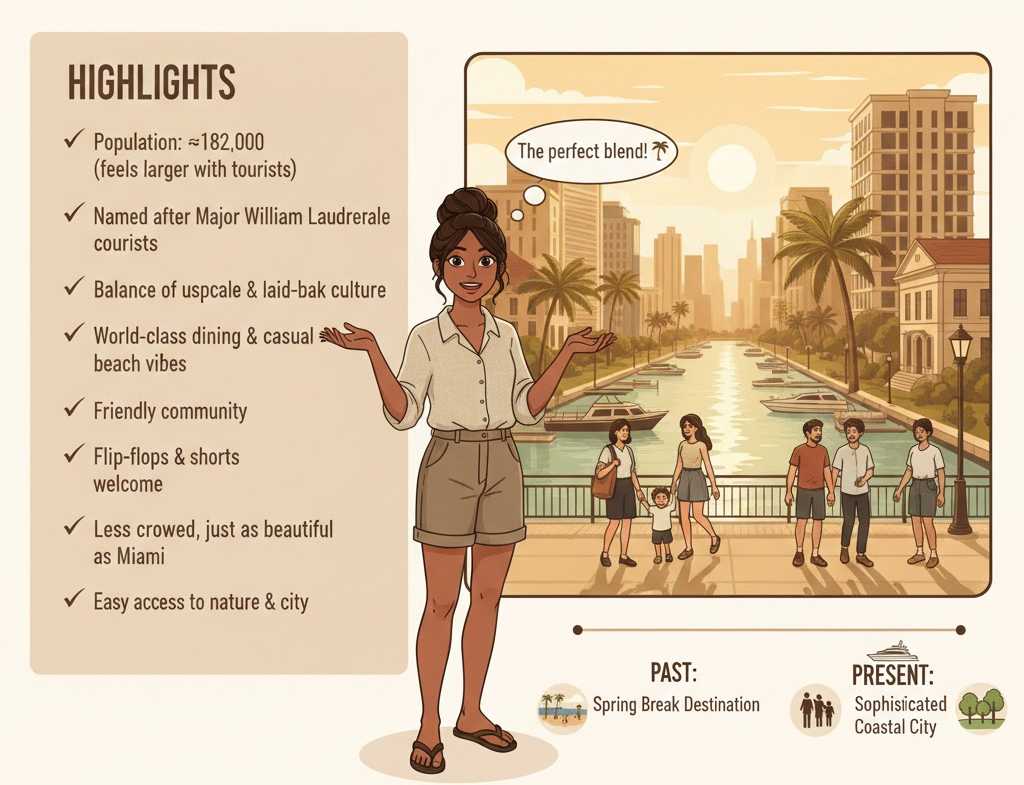
Fort Lauderdale, Florida, United States, sits on the southeastern coast of Florida, right between Miami and Palm Beach. This city has become one of my favorite destinations because it offers the perfect blend of sophistication and relaxation. Unlike the party atmosphere of Miami or the theme-park chaos of Orlando, this beautiful coastal city has developed its own distinct identity that attracts a different kind of visitor.
The moment you arrive, you’ll notice something different about this place. There’s an energy here that’s vibrant but not overwhelming. People move with purpose but not in a frantic rush. The architecture blends modern high-rises with historic buildings that tell the story of old Florida. I spent my first afternoon just wandering through the streets, taking in the atmosphere, and I immediately felt at ease.
Here’s what makes this city stand out:
- The population is about 182,000 permanent residents, but it feels much larger with tourists
- Named after Major William Lauderdale from the Second Seminole War
- Perfect balance between upscale amenities and laid-back beach culture
- World-class restaurants and luxury shopping mixed with casual beach vibes
- Friendly local community that welcomes visitors warmly
- You can wear flip-flops and shorts almost anywhere without judgment
- Less crowded than Miami but just as beautiful
- More sophisticated than typical Florida beach towns
- Easy access to both natural beauty and urban conveniences
- Strategic location for exploring all of South Florida
The city has undergone tremendous change over the past few decades. What was once known primarily as a spring break destination has matured into a sophisticated coastal city that attracts families, retirees, young professionals, and international visitors. The local government has invested heavily in beautification projects, creating parks, improving infrastructure, and supporting arts and culture initiatives. You can see the results of these efforts everywhere you look.
Beautiful Beaches in Fort Lauderdale, Florida, Verenigde Staten
The beaches in Fort Lauderdale, Florida, United States, are absolutely the crown jewel of this city. I spent countless mornings walking along the beachfront, and every single time felt magical. The beach has transformed over the years from a spring break party spot into a more refined, family-friendly destination that everyone can enjoy.
My typical beach morning started around 6:30 AM when the sun was beginning to rise. The beach would be nearly empty except for a few joggers and people walking their dogs. The sand felt cool under my feet, and the ocean was this incredible shade of blue-green that seemed to glow in the early light. I’d walk for about an hour, sometimes stopping to watch pelicans dive for fish or simply standing at the water’s edge, letting the waves wash over my feet.
The seven-mile stretch of beach offers something different at every point. The area near Las Olas Boulevard tends to be busier with more restaurants and activity. As you move north toward Lauderdale-by-the-Sea, the atmosphere becomes more residential and quieter. South toward Hollywood, you find a mix of hotels and condominiums with their own beach access points.
What you’ll love about the beaches here:
- Seven miles of continuous gorgeous coastline
- Golden sand that feels soft and clean under your feet
- Crystal clear water, especially in the morning hours
- Gentle waves are perfect for swimmers of all levels
- Newly renovated beachfront promenade for walking and jogging
- Never feels overcrowded even during peak season
- High-rise hotels with stunning ocean views
- Excellent beachfront restaurants and cafes
- Boutique shops along the beach area
- Beautiful sunrise views every morning
- Safe for families with young children
- Great for paddleboarding, kayaking, and water sports
- Free public beach access in multiple locations
- Clean and well-maintained facilities
- Lifeguards on duty during daylight hours
The beachfront promenade deserves special mention because it’s one of the best improvements the city has made in recent years. This wide, brick-paved walkway runs parallel to the beach and is perfect for walking, jogging, or rollerblading. Palm trees line both sides, providing occasional shade. Benches are placed at regular intervals where you can sit and watch the ocean. In the evening, the promenade comes alive with people enjoying the sunset, street performers entertaining crowds, and the outdoor cafes filling up with diners.
I particularly loved the beach volleyball courts that are set up along the sand. On any given afternoon, you’ll find pickup games happening with a mix of locals and tourists playing together. The atmosphere is friendly and inclusive. I joined a game one afternoon even though I hadn’t played volleyball in years, and everyone was welcoming and patient with my rusty skills.
Activities I enjoyed at the beach:
- Early morning beach walks, watching the sunrise
- Swimming in the calm, clear water
- Trying paddleboarding for the first time
- Beach volleyball with locals and tourists
- Simply relaxing with a good book under an umbrella
- Watching dolphins swim close to shore
- Building sandcastles with families nearby
- Evening strolls along the promenade
- Photography sessions during golden hour
The water quality in Fort Lauderdale is generally excellent. The city takes beach cleanliness seriously, with regular maintenance and water testing. I never saw significant amounts of seaweed or debris. The ocean floor slopes gradually, so you can wade out quite far before the water gets deep. This makes it ideal for families with children learning to swim or for people who want to cool off without going into deep water.
Amazing Waterways and Canals
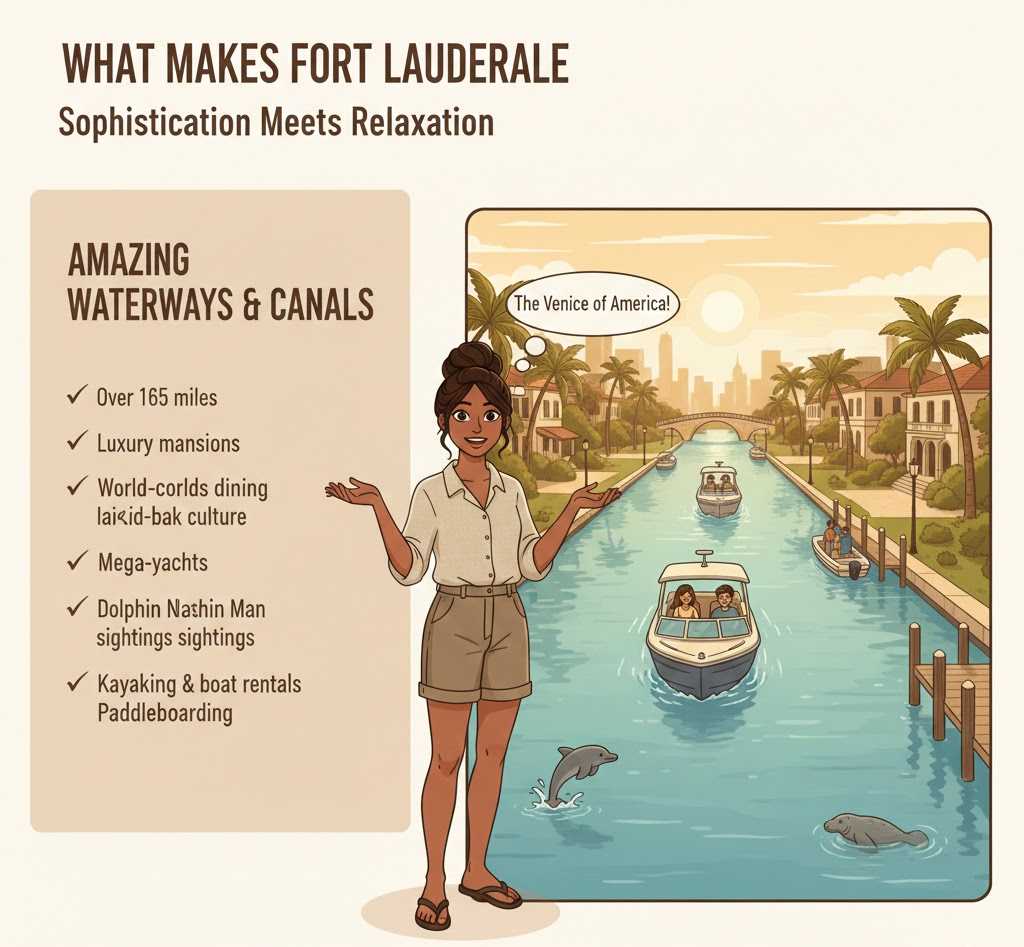
Fort Lauderdale, Florida, United States, has over 165 miles of waterways cutting through the city, which is exactly why everyone calls it the Venice of America. I took a water taxi tour on my second day, and it completely changed how I saw the city. From the water, you get to see incredible mansions, mega-yachts, and beautiful neighborhoods that you’d never spot from the road.
The waterway system is truly the heart and soul of this city. These canals were dug out in the early 20th century as the city developed, and they’ve become the defining characteristic of the area. The main artery is the Intracoastal Waterway, a massive channel that runs along Florida’s east coast. In Fort Lauderdale, this waterway separates the barrier island where the beach is located from the mainland.
I remember my first water taxi ride vividly. We departed from a dock downtown and immediately entered a different world. The captain, a local who’d lived here for thirty years, narrated our journey with stories about the mansions we passed. He pointed out the home of a famous musician, a tech billionaire’s estate, and historic properties that had been in the same families for generations.
What makes the waterways special:
- Over 165 miles of scenic canals and waterways
- The Intracoastal Waterway runs through the heart of the city
- Separates the mainland from the barrier island
- Home to incredible luxury mansions and estates
- Mega-yachts docked everywhere you look
- Regular dolphin and manatee sightings
- Water taxis operate as public transportation
- Boat rentals available for self-guided tours
- Kayaking and paddleboarding opportunities
- Fishing spots throughout the waterways
- Beautiful bridges connecting different areas
- Waterfront restaurants with dock access
- Marine life visible from boats and docks
The mansions along the Intracoastal are absolutely breathtaking. We’re talking about properties worth tens of millions of dollars with private docks, infinity pools, and manicured gardens that look like something from a magazine. Some have multiple levels of outdoor entertaining spaces, outdoor kitchens larger than most apartments, and yacht docks that could accommodate vessels over 100 feet long.
But it’s not just about the wealth on display. The waterways also offer incredible natural beauty. I saw dolphins almost every time I was on or near the water. They seem completely comfortable around boats and often swim alongside, seemingly just for fun. Manatees are also common, especially in the winter months when they seek out warmer waters. These gentle giants move slowly through the canals, and seeing one up close is an unforgettable experience.
Boating experiences worth trying:
- Water taxi tours to see the mansions
- Renting a small boat with friends
- Sunset dinner cruises
- Fishing charters in the Intracoastal
- Kayaking through calm canals
- Paddleboard tours with guides
- Party boat experiences
- Private yacht charters for special occasions
- Fort Lauderdale International Boat Show visit
I rented a small powerboat one afternoon with some friends I’d made at my hotel. None of us were experienced boaters, but the rental company gave us a thorough briefing and a simple map showing the best routes and places to explore. We spent four hours cruising around, getting lost in the maze of canals, discovering hidden restaurants where we could dock for lunch, and just enjoying being out on the water.
The freedom of having your own boat is incredible. You’re not on anyone’s schedule. You can stop wherever looks interesting, slow down to watch wildlife, or speed up to feel the wind in your hair. We found this quiet canal lined with beautiful homes where we cut the engine and just floated, enjoying the peace and the gorgeous Florida weather.
The Fort Lauderdale International Boat Show is something special if you’re in town when it’s on, usually in late October. It’s one of the largest boat shows in the world, with hundreds of millions of dollars’ worth of yachts on display. Even if you have no intention of buying a boat, it’s fascinating to walk through these floating palaces and see how the ultra-wealthy spend their money. Some of these yachts have helicopter pads, submarine garages, and crews of twenty people.
Weather You Can Count On in Fort Lauderdale, Florida, Verenigde Staten
Let me be honest about the weather in Fort Lauderdale, Florida, United States, because it matters when you’re planning a trip or considering moving here. The city has a tropical rainforest climate, which means it’s warm and humid year-round. Understanding the seasons will help you plan the perfect visit or prepare for life as a resident.
I experienced both winter and summer weather during my extended stays, and they’re dramatically different. The winter months are truly paradise. I’d wake up to temperatures in the mid-70s, perfect for a morning run or beach walk. By midday, it might reach 80 degrees, but there’s usually a breeze coming off the ocean that keeps things comfortable. The humidity is lower than in summer, so even when it’s warm, it doesn’t feel oppressive.
Winter weather from November to April:
- Temperatures around 75 to 80 degrees during the day
- Cool ocean breezes make it comfortable
- Low humidity compared to the summer months
- Rarely does it rain during these months
- Perfect beach weather every day
- Comfortable for outdoor activities
- A light jacket is needed only in the evenings
- Peak tourist season for good reason
- Ideal for visitors escaping cold weather
- Best time for outdoor dining and exploring
During these winter months, the city fills with snowbirds, people from northern states and Canada who escape the harsh winters. You’ll hear accents from New York, Boston, Toronto, and Montreal everywhere you go. The beaches are busier, restaurants require reservations, and hotel prices go up. But the weather is so perfect that it’s worth dealing with the crowds.
I’d sit at outdoor cafes in January, wearing shorts and a t-shirt, sipping iced coffee while friends back home dealt with snow and freezing temperatures. There’s something delightfully surreal about swimming in the ocean on Christmas Day or eating dinner outside in February. The consistent good weather means you can plan outdoor activities with confidence, knowing it’s unlikely to rain.
Summer weather from May to October:
- Temperatures in the high 80s and low 90s
- Very high humidity levels
- Feels hotter than the actual temperature
- Daily afternoon thunderstorms around 3 or 4 PM
- Storms last about 30 minutes, then sunshine returns
- Hurricane season runs from June 1st to November 30th
- Need to watch weather forecasts carefully
- Air conditioning is essential everywhere
- Morning activities are most comfortable
- The beach is still enjoyable early in the day
Summer in Fort Lauderdale, Florida, United States, is intense. I experienced my first Florida summer in July, and it was a learning curve. By 10 AM, the temperature would be in the upper 80s with humidity making it feel like 100 degrees. Walking from your air-conditioned car to a building would leave you sweating. The air feels thick and heavy, almost like you’re moving through water.
But locals have adapted to this climate, and you learn to work with it rather than against it. Most people do their outdoor activities early in the morning or after sunset. The beach is still enjoyable because you can cool off in the ocean. Many restaurants and bars have excellent air conditioning, and misting fans on outdoor patios make al fresco dining possible even in the heat.
The afternoon thunderstorms are a daily ritual in summer. Around 3 or 4 PM, you’ll notice dark clouds building on the horizon. The sky turns almost green-gray, and suddenly the wind picks up. Then comes the rain, often so heavy that visibility drops to almost nothing. Thunder rumbles, lightning flashes, and for about thirty minutes, it feels like the world is ending. Then, just as quickly, it stops. The sun comes out, steam rises from the pavement, and everything feels fresh and clean again.
What I learned about planning around weather:
- Book winter trips well in advance
- Summer offers better hotel prices
- Always have an indoor backup plan in summer
- Morning activities beat the afternoon heat
- Check hurricane forecasts during the season
- Bring sunscreen year-round
- Stay hydrated in the summer months
- Adopt the afternoon rain as a cool-down
Hurricane season is serious business. While Fort Lauderdale doesn’t get hit by hurricanes every year, the possibility exists from June through November. I was there during a hurricane warning once, and it was interesting to see how the community responded. Locals have been through this before, so there’s a calm, organized approach to preparation. Stores stock up on supplies, people board up windows, and everyone watches the weather forecasts closely. Fortunately, that particular storm turned away at the last minute, but the experience taught me to respect the power of nature.
Places I Absolutely Loved Visiting
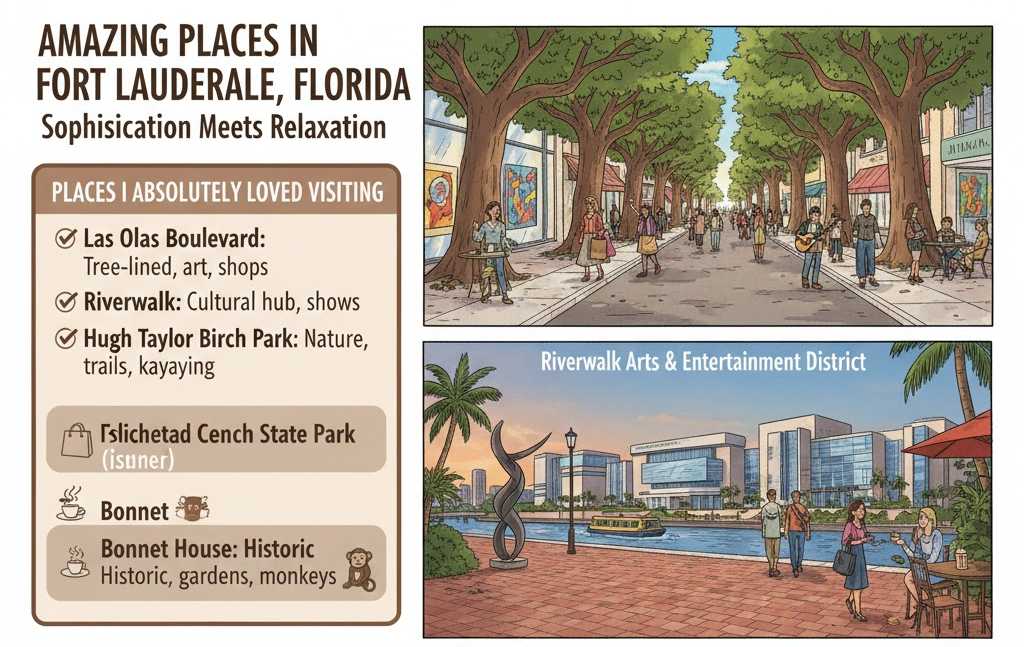
Fort Lauderdale, Florida, United States, surprised me with how many incredible places there are to explore. I thought it was just about beaches, but this city has amazing cultural attractions, beautiful parks, and vibrant neighborhoods with their own personalities. Every day brought discoveries and experiences that made me appreciate the depth and diversity of what this city has to offer.
Las Olas Boulevard became my favorite street in the entire city. This beautiful tree-lined avenue stretches from downtown to the beach, and it’s the cultural and commercial heart of Fort Lauderdale. The name means “The Waves” in Spanish, which is fitting given that it leads straight to the ocean.
I’d walk Las Olas almost every day, and I never got tired of it. The street is lined with massive banyan trees that create a natural canopy, providing shade even on the hottest days. The architecture is beautiful, with a mix of Mediterranean revival buildings from the 1920s alongside modern structures. Every few steps brings you to another interesting shop, gallery, or restaurant.
Las Olas Boulevard highlights:
- Beautiful tree-lined avenue from downtown to the beach
- Art galleries showcasing local and international artists
- Boutique shops selling unique items
- High-end designer stores
- Quirky local boutiques with handmade jewelry
- Sidewalk cafes are perfect for people-watching
- Excellent restaurants serving every cuisine
- Street performers and live music on weekends
- Easy walking distance between attractions
- Great shopping for all budgets
- Beautiful architecture to admire
- Safe and clean environment
- Busy atmosphere day and night
The art galleries on Las Olas are particularly impressive. I’m an artist myself, so I spent hours browsing through these spaces. You’ll find everything from contemporary abstract paintings to traditional landscapes, sculpture, photography, and mixed media installations. Some galleries focus on emerging local artists, while others represent established names from around the world. The gallery owners are usually happy to chat about the artwork and the artists, making it an educational experience as well as a visual feast.
Shopping on Las Olas ranges from practical to pure indulgence. There are clothing boutiques where you can find unique pieces you won’t see anywhere else, jewelry stores with stunning handcrafted items, home décor shops filled with coastal-inspired furnishings, and even specialty food stores selling gourmet ingredients. I bought several gifts for friends back home, including handmade pottery from a local artist and some amazing hot sauce from a shop that specialized in artisan condiments.
The restaurant scene on Las Olas deserves its own paragraph. You can find literally any cuisine you’re craving. I had incredible Italian food at a family-run trattoria where the pasta was made fresh every day. There’s an excellent steakhouse where locals celebrate special occasions. A Japanese restaurant serves sushi so fresh it melts in your mouth. Casual cafes offer breakfast and coffee. Wine bars provide the perfect spot for an afternoon drink. And several restaurants have outdoor seating where you can watch the world go by while you eat.
Riverwalk Arts and Entertainment District features:
- Lovely brick promenade along the New River
- Connects museums, restaurants, and cultural venues
- NSU Art Museum with contemporary collections
- Broward Center for the Performing Arts
- Broadway shows and concerts regularly
- Dance performances and cultural events
- Waterfront dining with beautiful views
- Public art installations throughout
- Free events and festivals often
- Perfect for evening strolls
- Family-friendly atmosphere
- Well-lit and safe at night
The Riverwalk was another discovery that exceeded my expectations. This brick pathway runs along both sides of the New River for about a mile, connecting various cultural institutions and entertainment venues. It’s beautifully landscaped with tropical plants, benches, and lighting that make it inviting even after dark.
I visited the NSU Art Museum on a rainy afternoon and was blown away by the collection. The museum focuses on contemporary art, with particularly strong holdings in Latin American art and the CoBrA movement. The building itself is architecturally interesting, and the rotating exhibitions ensure there’s always something new to see. Best of all, admission is very reasonable, and they offer free entry on certain days.
The Broward Center for the Performing Arts is a world-class venue that hosts touring Broadway shows, concerts by major artists, ballet, opera, and more. I saw a Broadway musical there, and the acoustics were excellent, the seats comfortable, and the production quality matched anything you’d see in New York. Having this level of cultural programming available makes Fort Lauderdale feel like a much larger city.
Hugh Taylor Birch State Park experiences:
- 180 acres of natural Florida landscape
- Located between the Intracoastal and the ocean
- Shaded bike trails through tropical vegetation
- Bird watching opportunities are everywhere
- Butterfly sightings throughout the park
- Freshwater lagoon for kayaking
- Feels like a jungle in the middle of the city
- Peaceful escape from beach crowds
- Picnic areas with grills
- Nature center with educational programs
- Beach access from the park
- Affordable entrance fee
- Bike rentals available on-site
Hugh Taylor Birch State Park became my retreat when I needed a break from the beach scene. Despite being surrounded by development on all sides, this park feels like wilderness. The 180 acres are filled with native Florida vegetation, creating a habitat for dozens of bird species, butterflies, gophertortoises, and other wildlife.
I rented a bike and rode the paved trails that wind through the park. The canopy overhead was so thick that even on bright days, it felt cool and shaded. I’d stop frequently to watch birds or to enjoy the quiet. There’s something deeply restorative about being in nature, especially when you’re just minutes from a busy beach and urban area.
The park also has a freshwater lagoon where you can rent kayaks or bring your own. Paddling through this peaceful water surrounded by mangroves and wildlife is meditation in motion. I saw herons, egrets, and even an osprey diving for fish. The water was calm and clear, perfect for beginners who might feel intimidated by ocean kayaking.
Bonnet House Museum and Gardens magic:
- Historic home on 35 acres of land
- Filled with art and antiques
- Incredible gardens with tropical plants
- Orchids blooming everywhere
- Monkeys living on the property
- Swans in the lagoon
- Guided tours explain the history
- Built by artists in the early 1900s
- Beautiful landscaping and design
- Photography is allowed in gardens
- Special events are held regularly
- Peaceful and enchanting atmosphere
- Educational and entertaining
The Bonnet House Museum and Gardens is pure magic. This historic estate sits on a barrier island between the ocean and the Intracoastal, and stepping onto the property feels like entering another world. The house was built in the 1920s by artist Frederic Clay Bartlett and his wife, Evelyn, and every inch reflects their artistic sensibilities and love of nature.
I took a guided tour, and the docent brought the house to life with stories about the Bartletts and their bohemian lifestyle. The rooms are filled with Frederic’s paintings, Evelyn’s collections, and furniture from their travels. But as beautiful as the house is, the gardens are even more spectacular.
The 35-acre grounds include native coastal hammock, mangrove wetlands, and formal gardens. I wandered through orchid displays where hundreds of plants bloomed in vibrant colors. The desert garden featured cacti and succulents from around the world. Most surprising were the monkeys, descendants of a troop introduced decades ago, who still live on the property. Watching them swing through the trees adds an exotic element you don’t expect in a Florida botanical garden.
Food That Made Me Never Want to Leave Fort Lauderdale, Florida, Verenigde Staten
The food scene in Fort Lauderdale, Florida, United States, is seriously underrated. Because the city is so international and right on the ocean, you get this amazing mix of fresh seafood and cuisine from all over the world. Every meal became an adventure for me, and I gained a few pounds enjoying everything this city has to offer.
The proximity to the ocean means seafood doesn’t get much fresher. Fishing boats go out daily, and many restaurants have direct relationships with local fishermen. You’ll see “catch of the day” on menus, and the fish was literally swimming in the Atlantic that morning. This freshness makes an incredible difference in taste and quality.
Fresh seafood experiences:
- Grouper caught daily and served fresh
- Mahi-mahi is prepared in countless ways
- Stone crab claws during the October to May season
- Sweet and tender crab meat
- Served cold with mustard sauce
- Restaurants right on the beach
- Sunset dining while eating seafood
- Oysters from local waters
- Shrimp prepared every way imaginable
- Fresh fish markets to buy and cook yourself
- Sustainable seafood options are available
- Chefs explain where fish came from
- Daily specials based on fresh catches
My favorite seafood experience was at a beachfront restaurant where I ordered the grouper sandwich. Now, I’d had grouper before, but this was different. The fish was so fresh and perfectly cooked, flaky and moist with a light seasoning that enhanced rather than masked its natural flavor. I sat on the patio, sand under my feet, watching the sunset paint the sky orange and pink, eating this incredible fish sandwich, and thinking life doesn’t get much better than this.
Stone crab claws are a South Florida delicacy, and Fort Lauderdale is one of the best places to try them. The season runs from October 15th to May 15th, and during those months, you’ll find them on menus everywhere. The meat is sweet and delicate, nothing like regular crab. They’re served chilled with mustard sauce, and the ritual of cracking the shells and extracting the meat becomes part of the enjoyment.
Cuban food discoveries:
- Authentic Cuban cafes throughout the city
- Cafe con leche every morning
- Cuban sandwiches made perfectly
- Roasted pork seasoned traditionally
- Ham and Swiss cheese layers
- Pickles and mustard on Cuban bread
- Pressed until crispy and hot
- Owners from Havana with family recipes
- Everything is made from scratch
- Affordable prices for generous portions
- Plantains and black beans as sides
- Croquetas are perfect snacks
- Flan for dessert
Fort Lauderdale has a significant Cuban population, and the Cuban food here is as authentic as you’ll find outside of Cuba itself. I discovered a small Cuban cafe about two blocks from my hotel, run by a couple who had immigrated from Havana thirty years ago. The cafe became my morning ritual.
Every day, I’d walk there around 8 AM and order a café con leche and a Cuban sandwich. The café con leche is strong Cuban coffee mixed with steamed milk and sweetened with sugar. It’s served in a small cup, and the first sip would jolt my system awake better than any alarm clock. The Cuban sandwich became my obsession. Roasted pork marinated overnight, sliced ham, Swiss cheese, pickles, and mustard on Cuban bread, pressed until the cheese melts and the bread is crispy on the outside but soft inside.
What made this cafe special was the family atmosphere. The owners, Maria and Carlos, remembered the names and orders of regular customers. They’d ask about your day, offer recommendations for things to do in the city, and treat everyone like family. The walls were covered with photos of Cuba and certificates from the owners’ children and grandchildren. Salsa music played softly in the background. It felt authentic and welcoming in a way that chain restaurants never can.
International cuisine options:
- Italian restaurants with homemade pasta
- Japanese sushi bars with fresh fish
- Thai food with authentic flavors
- Mexican tacos and authentic dishes
- Brazilian steakhouses for meat lovers
- Greek restaurants with Mediterranean food
- French bistros with classic preparations
- Caribbean flavors from island cultures
- Asian fusion restaurants
- Middle Eastern shawarma and kebabs
The international food scene reflects Fort Lauderdale’s diverse population. I ate at an Italian restaurant where the chef was from Naples and made pasta by hand every day. The difference between fresh pasta and dried pasta from a box is night and day. The texture is silkier, the flavor more delicate, and it holds sauce perfectly.
There’s a Japanese restaurant where I became friends with the sushi chef. He’d been trained in Tokyo and took incredible pride in his work. Watching him prepare sushi was like watching an artist create. Every piece of fish was cut with precision, the rice seasoned perfectly, and the presentation beautiful. He explained that sushi is about more than just raw fish; it’s about balance, temperature, texture, and respecting the ingredients.
The Thai restaurant I found served food that was actually spicy, not the toned-down Western version. I ordered a green curry that made my eyes water and my nose run, but the complexity of flavors behind the heat was incredible. The chef came out to check on me when she saw my reaction, and we ended up having a great conversation about Thai cooking and her journey from Bangkok to Fort Lauderdale.
Farm-to-table movement growing:
- Restaurants sourcing from local Florida farms
- Menus change daily based on availability
- Sustainable seafood commitments
- Chefs explaining ingredient origins
- Fresh vegetables from nearby farms
- Organic options are increasingly available
- Supporting the local food economy
- Better quality and fresher ingredients
- More environmentally conscious dining
What excited me most was discovering the growing farm-to-table movement in Fort Lauderdale, Florida, United States. Several restaurants are committed to sourcing ingredients locally and sustainably. I ate at one restaurant where the menu changed daily based on what was available from nearby farms and what fish were being caught.
The chef came to the table to explain each dish and its ingredient sources. The tomatoes were from a farm in Homestead, picked that morning. The fish was caught by a boat that docked just a few miles away. The herbs came from the restaurant’s own garden. You could taste the difference freshness makes. The flavors were brighter, more intense, more alive than what you get from ingredients that have traveled thousands of miles.
Getting Around Fort Lauderdale, Florida, Verenigde Staten
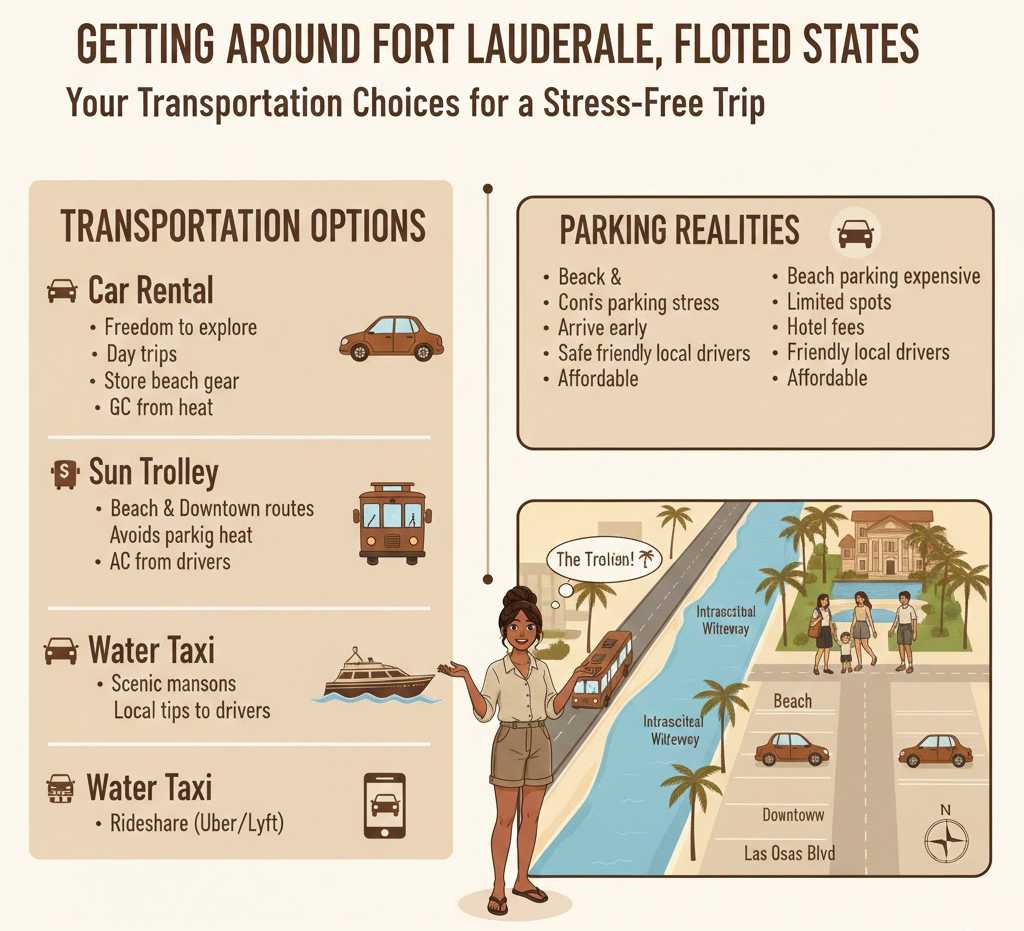
Fort Lauderdale, Florida, United States, is spread out, so you’ll need a way to get around. I tried different transportation options during my stay, and each has its advantages depending on what you’re doing and where you’re going. Understanding your transportation choices will help you plan your days more efficiently and enjoy the city without stress.
The city covers about 38 square miles, and attractions are spread throughout this area. The beach is on a barrier island, downtown is on the mainland across the Intracoastal, and interesting neighborhoods extend in all directions. Walking is great for exploring specific areas, but you’ll need wheels to get around the city.
Car rental benefits:
- Freedom to explore neighborhoods
- Easy drives to nearby towns
- Can visit attractions at your own pace
- Store shopping bags and beach gear
- Air conditioning is an escape from the heat
- GPS navigation is helpful for tourists
- Park and explore on foot
- Day trips up the coast are possible
- Most hotels offer parking
- Rates are reasonable when booked in advance
I rented a car for most of my stay in Fort Lauderdale, and I’m glad I did. Having your own vehicle gives you the freedom to explore on your own schedule. I could drive to different beaches to compare them, venture into interesting neighborhoods I’d heard about, make day trips to nearby cities, and not worry about whether I’d miss the last bus or taxi home.
The roads in Fort Lauderdale are generally well-maintained and easy to navigate. A1A runs along the coast, offering beautiful ocean views. US 1 and I-95 run north-south through the mainland. The street grid is logical once you understand it. Most rental cars come with GPS, or you can use your phone for navigation, which helps tremendously when you’re unfamiliar with the area.
One day, I drove up to Boca Raton for lunch, spent the afternoon exploring that beautiful city, and then drove back through some residential neighborhoods in Fort Lauderdale I’d been curious about. Another day, I went south to Hollywood and Hallandale Beach. These spontaneous explorations would have been much more difficult without a car.
Parking realities to know:
- Beach parking can be expensive
- Limited spaces near popular areas
- Arrive early for the best spots
- Some hotels charge daily parking fees
- Public parking garages are available
- Street parking with meters downtown
- Valet parking at restaurants
- Free parking at some attractions
- Plan parking in advance
The main downside of having a car is parking, especially near the beach. Popular beach access points have parking lots that fill up early on weekends and during peak season. I learned to arrive before 9 AM if I wanted a spot, or to look for less popular access points that had more availability.
Parking meters are common along the street in busy areas. You’ll need quarters or a credit card, and time limits vary. I got one parking ticket early in my stay after misreading the time restriction sign. That was an expensive lesson about paying attention to parking regulations.
Many hotels charge for parking, which can add $25 to $40 per day to your costs. Some offer validated parking if you dine at their restaurant or use their facilities. It’s worth asking about parking fees when booking your hotel, as this can significantly impact your budget.
Sun Trolley advantages:
- Completely free to ride
- Runs along the beach route
- Goes through the downtown area
- Avoids parking hassles
- Air-conditioned and comfortable
- Runs on a regular schedule
- Great for short trips
- Eco-friendly transportation option
- Meets other travelers on board
- Drivers give helpful tips
The Sun Trolley is Fort Lauderdale’s free public trolley service, and it’s an excellent option for getting around without a car. The trolley runs on several routes, with the beach route being most useful for visitors. It stops at major hotels, shopping areas, and attractions along A1A.
I used the trolley several times, particularly when I wanted to go out for dinner and have a few drinks without worrying about driving. The trolleys run on a regular schedule, usually every 15 to 20 minutes, depending on the route and time of day. They’re clean, air-conditioned, and much more comfortable than buses in some cities.
The drivers are often friendly and happy to provide information about where to eat, what to see, and how to get around. I had one driver who gave a running commentary about the area as we drove, pointing out interesting buildings and sharing local history. It made the ride entertaining and educational.
Water taxi experiences:
- Not just a tour but real transportation
- Locals use it for commuting
- Stops at major waterfront locations
- See the city from the water
- Avoid traffic completely
- Unique way to travel
- Day passes available
- Scenic and relaxing journey
- Connect to restaurants and hotels
- Fun experience for visitors
The water taxi system in Fort Lauderdale, Florida, United States, is something special. While it’s popular with tourists, locals actually use it as legitimate transportation, especially people who live or work on properties along the waterways. The water taxi stops at hotels, restaurants, shopping areas, and attractions throughout the city, all accessible by water.
I bought a day pass and used the water taxi to get around for an entire day. It was one of my favorite experiences in the city. Instead of sitting in traffic, I’d be cruising along the Intracoastal, feeling the breeze, watching the scenery, and arriving at my destination completely relaxed. The boats themselves offer comfortable indoor and outdoor seating.
One evening, I took the water taxi to a waterfront restaurant for dinner. The restaurant had its own dock, so the taxi dropped me right at the front door. After dinner, I called for pickup using the water taxi app, and within 15 minutes, I was on my way back to my hotel. It felt luxurious and special, like having a private water chauffeur.
Rideshare services:
- Uber and Lyft work great here
- Drivers usually arrive quickly
- Friendly drivers with local knowledge
- Get restaurant recommendations
- Learn about hidden spots
- Avoid drinking and driving
- No parking stress
- Split fares with travel companions
- Track your ride on the app
- Generally affordable rates
Uber and Lyft both operate throughout Fort Lauderdale, and they’re reliable and convenient. I used these services frequently, especially for going out at night or when I didn’t feel like dealing with parking. Wait times were usually short, typically under 10 minutes, even during busy periods.
The drivers I met were interesting people with diverse backgrounds. One was a retired teacher who drove part-time to stay active and meet people. Another was a college student working his way through school. Many were happy to share their knowledge about the city, recommending restaurants I should try or events happening during my stay.
The costs were reasonable, especially when split between multiple people. A ride from downtown to the beach would cost $10 to $15, less than parking fees plus the hassle of finding a spot. For going out to dinner or bars, using rideshare meant nobody had to worry about being the designated driver.
People and Community
What really makes Fort Lauderdale, Florida, United States, special is the people who live here. The city has this wonderful diversity that creates a welcoming atmosphere for everyone. During my time there, I met people from all walks of life who all seemed genuinely happy to call this place home. The community spirit here is palpable and contributes significantly to the overall quality of life.
From my very first interactions, I noticed something different about the people in Fort Lauderdale. There’s a friendliness and openness that feels genuine rather than forced. Whether I was at a coffee shop, on the beach, or at a restaurant, people were willing to chat, offer recommendations, and share their experiences. This wasn’t the cold anonymity of some big cities or the cliquishness of some small towns. It was a comfortable middle ground where strangers could become friends over the course of a conversation.
The diverse community includes:
- Retirees who moved from northeastern states
- Young professionals in tech and finance
- Families who have lived here for generations
- People from all over the world
- Artists and creative professionals
- Business owners and entrepreneurs
- College students at local universities
- Seasonal visitors called snowbirds
- Boating and yachting enthusiasts
- LGBTQ community members are welcomed openly
The demographic mix creates a fascinating cultural blend. I had breakfast conversations with a retired couple from New Jersey who’d moved here five years ago and never looked back. I met a tech entrepreneur from California who chose Fort Lauderdale over Silicon Valley for his startup. I became friends with a local artist whose family had lived in the area for four generations. Each person had their own story about why they were here and what they loved about the city.
The international character of Fort Lauderdale surprised me. I met people from Brazil, Argentina, Venezuela, Colombia, and other Latin American countries. There’s a significant European population, including British, French, German, and Italian residents. I heard Spanish, Portuguese, French, and other languages spoken regularly. This international flavor influences everything from the restaurant scene and cultural events to the community’s general worldview.
What I noticed about local culture:
- People are more relaxed than in bigger cities
- Less rush and hustle than Miami
- Folks take time to chat and connect
- Strangers offer helpful tips freely
- Genuine warmth in interactions
- Pride in their city
- Protective of the natural environment
- Support local businesses
- Attend community events regularly
- Beach culture influences everything
The pace of life in Fort Lauderdale, Florida, United States, is noticeably more relaxed than in cities like New York, Los Angeles, or even Miami. People are not in a constant rush. They take time to enjoy their coffee rather than gulping it down while running to the next appointment. They linger over meals instead of eating quickly and moving on. This slower, more mindful approach to daily life was refreshing and something I quickly adapted to.
I noticed that people take pride in their city and its environment. There’s a strong environmental consciousness here because residents are so connected to the ocean and waterways. Beach cleanups are regular community events. Restaurants promote sustainable seafood. Conversations about protecting the coral reefs and marine life are common. This isn’t performative environmentalism; it’s a genuine care for the natural resources that make this place special.
Supporting local businesses is another value I observed. While chain restaurants and stores exist, locals tend to prefer independent establishments. The coffee shop I frequented was locally owned, as were my favorite restaurants, the bookstore I discovered, and many shops I visited. People told me they preferred supporting their neighbors’ businesses rather than sending money to corporate headquarters in other states.
Wilton Manors neighborhood character:
- Known as a very LGBTQ-friendly area
- Rainbow flags are displayed proudly
- Vibrant nightlife scene
- Inclusive and welcoming atmosphere
- Great restaurants and bars
- Annual Pride celebrations
- Safe and comfortable environment
- Mix of residential and commercial
- Walkable streets and shops
- Community events year-round
Wilton Manors, technically a separate city but essentially a neighborhood within the Fort Lauderdale area, deserves special mention. This is one of the most LGBTQ-friendly communities in America, with a reputation for inclusion and acceptance that attracts people from around the world.
I spent several evenings in Wilton Manors and was struck by the vibrant, welcoming atmosphere. Rainbow flags flew from businesses and homes. The main street, Wilton Drive, was lined with restaurants, bars, cafes, and shops, all busy with a diverse crowd. The energy was festive but not chaotic, friendly but not forced.
What impressed me most was how comfortable everyone seemed. Same-sex couples walked hand in hand without a second thought. The atmosphere was open and accepting in a way that, unfortunately, isn’t universal even in 2026. This creates a community where people can be themselves without fear or judgment, which contributes to the area’s overall positive vibe.
Practical Things You Should Know About Fort Lauderdale, Florida, Verenigde Staten
Before you visit or move to Fort Lauderdale, Florida, United States, consider these practical tips to help you plan better. I wish someone had told me some of these things before my first visit, so I’m sharing them with you now. Understanding the financial realities, safety considerations, and practical details will help you make informed decisions and avoid surprises.
The cost of living is one of the first things people ask about, and it’s important to have realistic expectations. Fort Lauderdale isn’t cheap, but it’s also not as expensive as some other desirable coastal cities. The lack of state income tax in Florida helps offset some of the higher costs in other areas, but you need to consider the total picture.
Cost of living realities:
- Higher than the national average overall
- Lower than Miami or New York City
- Housing costs are high
- Beachfront properties are very expensive
- Waterfront homes command premium prices
- Inland areas are more affordable
- Rental market competitive
- Utilities reasonable year-round
- Groceries similar to the national average
- Dining out ranges from cheap to expensive
- Entertainment options for all budgets
Housing is the biggest expense for most people. If you want to live on or near the beach, be prepared to pay premium prices. Beachfront condos easily run $500,000 to several million dollars, with monthly condo fees that can exceed $1,000. Renting a beachfront apartment might cost $2,500 to $4,000 or more per month for a decent one-bedroom.
However, if you’re willing to live a few miles inland, the prices drop significantly. I looked at apartments in neighborhoods about three miles from the beach, and rent for a nice one-bedroom ranged from $1,500 to $2,200 per month. Still not cheap, but more manageable than beachfront prices. The trade-off is a short drive or bike ride to reach the ocean rather than walking out your door onto the sand.
Utilities in Fort Lauderdale, Florida, United States, are reasonable, especially compared to some northern cities. Air conditioning is essential and will run constantly in summer, but electricity rates are competitive. Water and trash services are typically included in condo fees or are reasonably priced for single-family homes. Internet and cable television packages are comparable to those in other cities.
Groceries cost about the same as the national average, though some items may be slightly higher. There are multiple supermarket chains to choose from, including Publix (a Southern favorite), Whole Foods, Trader Joe’s, and ethnic markets specializing in Latin American, Asian, and other international foods. Shopping around and taking advantage of sales can keep food costs manageable.
Florida tax advantages:
- No state income tax at all
- Sales tax on most purchases
- Property taxes can be significant
- Homestead exemption for residents
- No estate tax or inheritance tax
- Lower overall tax burden for many
- Attractive for retirees on a fixed income
- Business-friendly tax environment
The lack of state income tax in Florida is a major draw for many people, especially those moving from high-tax states like New York, New Jersey, or California. If you’re earning a decent income, the savings can be substantial. Someone making $100,000 per year in New York might pay $6,000 to $7,000 in state income tax, money that stays in their pocket in Florida.
However, it’s important to understand that Florida makes up for the lack of income tax through other means. The state sales tax is 6%, plus local surtaxes that can bring it to 7% in Broward County. This affects everything you purchase except groceries and prescriptions, so it adds up over time.
Property taxes in Fort Lauderdale, Florida, United States, can be significant, typically around 1% to 1.5% of your home’s assessed value annually. For a $500,000 home, that’s $5,000 to $7,500 per year. However, Florida’s homestead exemption provides up to $50,000 in property tax relief for primary residences, helping reduce this burden for actual residents.
For retirees living on fixed incomes, the lack of income tax and no estate or inheritance tax makes Florida very attractive. Social Security benefits aren’t taxed at the state level, and pension income isn’t subject to state tax either. This allows retirement savings to stretch further.
Insurance considerations:
- Flood insurance is often required
- Hurricane insurance essential
- Homeowners insurance expensive
- Car insurance rates are reasonable
- Health insurance is the same as elsewhere
- Coverage is important during hurricane season
- Shop around for the best rates
- Bundle policies for savings
Insurance can be expensive in Florida, particularly homeowners’ insurance. The combination of hurricane risk, flooding potential, and aging infrastructure means insurance companies charge higher premiums than in many other states. I spoke with several homeowners who said their insurance costs had doubled or tripled in recent years, becoming a significant monthly expense.
If you buy property in a flood zone, which includes much of Fort Lauderdale, Florida, United States, you’ll be required to carry flood insurance. This is separate from your homeowners’ policy and can cost several thousand dollars per year, depending on your location and elevation. Hurricane insurance (usually part of your homeowners policy but with a separate, higher deductible) is essential given the risk.
Car insurance rates in Fort Lauderdale are actually reasonable compared to some major cities. Florida is a no-fault state, which affects how insurance works, but basic coverage is comparable to other states. Shopping around among different insurance companies can yield significantly different quotes, so it pays to compare options.
Safety and security tips:
- Generally safe city overall
- Use common sense precautions
- Well-lit areas are safest at night
- Tourist areas well-patrolled
- Beach areas are safe during the day
- Stick to busy areas after dark
- Las Olas Boulevard is very safe
- Lock cars and hotel rooms
- Don’t leave valuables visible
- Trust your instincts always
- Local police were responsive and helpful
- Emergency services are readily available
Fort Lauderdale is generally a safe city, especially in the tourist areas and nicer neighborhoods. I never felt unsafe during my stay, even when walking around at night in well-populated areas. The beach, Las Olas Boulevard, the Riverwalk, and other main attractions have good security and regular police presence.
That said, like any city, Fort Lauderdale has less safe areas, particularly some neighborhoods west of I-95. Locals advised me to avoid certain areas after dark, and I did. Using common sense goes a long way: don’t flash expensive jewelry or large amounts of cash, keep car doors locked, don’t leave bags or valuables visible in your car, and stay aware of your surroundings.
The Fort Lauderdale Police Department has a good reputation and is responsive to calls for service. I witnessed them handling a minor incident near the beach with professionalism and courtesy. Emergency services, including ambulances and the fire department, are readily available throughout the city.
Best times to visit:
- November through April is ideal weather
- Perfect temperatures and low humidity
- More crowded during these months
- Higher hotel and airfare prices
- Book accommodations well in advance
- Avoid hurricane season from June to November
- Summer has better deals
- Fewer tourists in the hot months
- September and October are the quietest
- Holiday weeks are the most expensive
Timing your visit to Fort Lauderdale, Florida, United States, makes a huge difference in your experience and your budget. The peak season runs from November through April, coinciding with when the weather is absolutely perfect. If you can visit during these months, you’ll enjoy ideal beach weather, comfortable temperatures for outdoor activities, and generally sunny skies.
However, peak season also means peak prices and peak crowds. Hotels that cost $150 per night in September might charge $300 or more in February. Flights are more expensive. Restaurants are busier and may require reservations. The beaches are more crowded. If you don’t mind paying premium prices and dealing with crowds, the perfect weather makes it worthwhile.
Summer offers significant savings on accommodations and fewer crowds, but you’ll deal with heat, humidity, and afternoon thunderstorms. I actually enjoyed visiting in summer because I had the beaches to myself, could get reservations at top restaurants without planning weeks, and saved substantially on hotel costs. The key is adjusting your schedule to do outdoor activities in the morning and to find air-conditioned indoor activities in the afternoon.
The shoulder seasons of May and November can offer the best of both worlds. Prices are lower than peak season but higher than summer. The weather is transitioning, so you might get some perfect days and some hot days. Crowds are moderate. Hurricane risk exists, but it is lower than in the middle of summer.
Why Fort Lauderdale, Florida, United States Captured My Heart
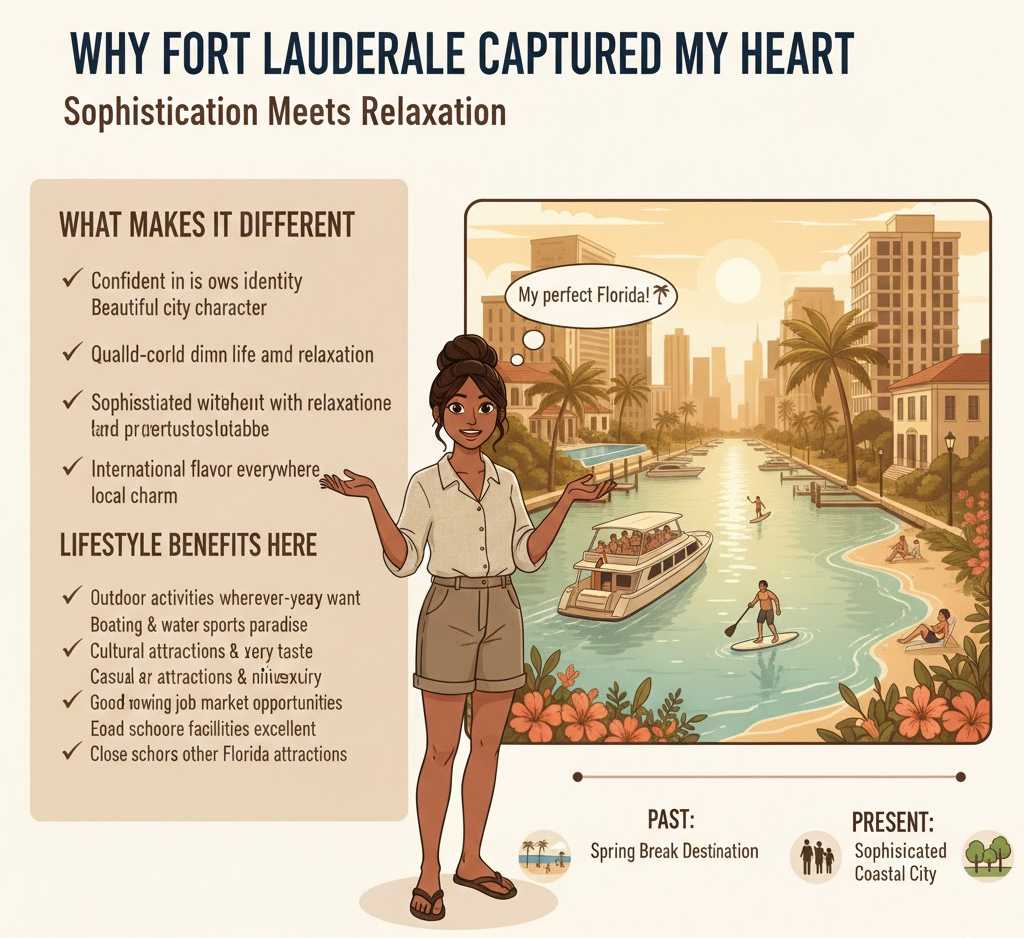
After spending extended time in Fort Lauderdale, Florida, United States, I understand why so many people fall in love with this city. It offers the perfect Florida lifestyle you dream of: beautiful beaches, endless sunshine, water activities everywhere, great food from around the world, and a welcoming community that makes you feel at home immediately. But beyond these surface attractions, there’s something deeper that makes this place special.
The city has found its own identity, separate from Miami’s flashy reputation and Orlando’s theme-park focus. Fort Lauderdale is confident in being exactly what it is: a sophisticated beach community where people enjoy an outdoor lifestyle, cultural amenities, and genuine connections with their neighbors. It’s not trying to be something it’s not, and that authenticity is refreshing.
What makes it different from other Florida cities:
- Not trying to be Miami’s flashy cousin
- Doesn’t compete with Orlando’s theme parks
- Confident in its own identity
- Beautiful beach city with character
- Quality of life that’s hard to beat
- Balance of excitement and relaxation
- Sophisticated without being pretentious
- Casual enough to feel comfortable
- International flavor with local charm
- Natural beauty everywhere you look
I’ve visited many beach cities in the United States and around the world, and Fort Lauderdale stands out for its balance. It’s upscale enough to have excellent restaurants, cultural attractions, and beautiful properties, but it’s not pretentious or stuffy. You can have a world-class dining experience one night and eat fish tacos from a food truck the next night, and both feel equally appropriate.
The connection to the water that permeates everything in Fort Lauderdale, Florida, United States, creates a unique lifestyle. Water isn’t just scenery here; it’s an integral part of daily life. People commute by boat, exercise by paddleboarding or swimming, socialize on yachts, and plan their lives around ocean access. This relationship with water shapes the culture and the community in ways that landlocked cities can’t replicate.
The lifestyle benefits here:
- Outdoor activities year-round
- Beach access whenever you want
- Boating and water sports paradise
- Great restaurants for every taste
- Cultural attractions and museums
- Shopping from budget to luxury
- Safe neighborhoods for families
- Good schools and universities
- Growing job market opportunities
- Healthcare facilities excellent
- Easy airport access
- Close to other Florida attractions
Living in or visiting Fort Lauderdale means having incredible outdoor recreation at your fingertips. You can wake up and go for a swim in the ocean before work. You can paddleboard at sunset after a long day. You can fish from the beach on Saturday morning or take a boat out on Sunday afternoon. Access to nature and outdoor activities contributes to both physical health and mental well-being.
The cultural scene surprised me with its depth. For a city this size, the number and quality of museums, galleries, theaters, and music venues are impressive. You’re not stuck choosing between beach life and cultural experiences; you can have both. This makes Fort Lauderdale attractive not just to retirees looking to relax, but also to young professionals, families, and anyone seeking a well-rounded lifestyle.
My favorite memories from Fort Lauderdale, Florida, Verenigde Staten:
- Watching dolphins play in the Intracoastal
- Eating fresh grouper with toes in the sand
- Sunrise walks along the beach
- Making friends from around the world
- Water taxi rides seeing mansions
- Cuban coffee and sandwiches
- Discovering hidden local spots
- Kayaking through peaceful canals
- Art galleries on Las Olas
- Thunderstorms are clearing the air
- Friendly conversations with strangers
- Feeling welcomed everywhere
The memories I made during my time in Fort Lauderdale go beyond just visiting tourist attractions or seeing beautiful scenery. What stays with me most are the human connections I made and the feelings the city evoked. There’s something about the combination of natural beauty, comfortable climate, and friendly people that creates an environment where you can truly relax and be yourself.
I think about the mornings I’d walk to the Cuban cafe and chat with Carlos and Maria about life, philosophy, and their experiences immigrating to America. I remember the afternoon I helped a family build a sandcastle on the beach, and we ended up spending hours together while our impromptu sand structure grew more elaborate. I recall the water taxi captain who shared stories about Fort Lauderdale’s history and pointed out mansions belonging to celebrities and business moguls. These personal interactions transformed what could have been just another vacation into something meaningful.
If you get the chance to visit Fort Lauderdale, Florida, United States, take it without hesitation. And when you do, slow down and enjoy the sunshine. Don’t rush from attraction to attraction, trying to see everything. Instead, pick a few things that genuinely interest you and experience them fully. Talk to the locals who love sharing their city and their knowledge. Eat at local restaurants rather than chains. Explore neighborhoods beyond just the beach. Let yourself settle into the rhythm of this place.
Whether you come for a long weekend, spend the entire winter season as a snowbird, or decide to make Fort Lauderdale your permanent home, this special city will capture your heart and make you understand why so many people never want to leave. The combination of natural beauty, perfect weather most of the year, excellent amenities, and genuine community creates a quality of life that’s increasingly rare in our modern world. Fort Lauderdale, Florida, United States, isn’t just a place to visit; it’s a place to experience, to feel, and perhaps to call home.