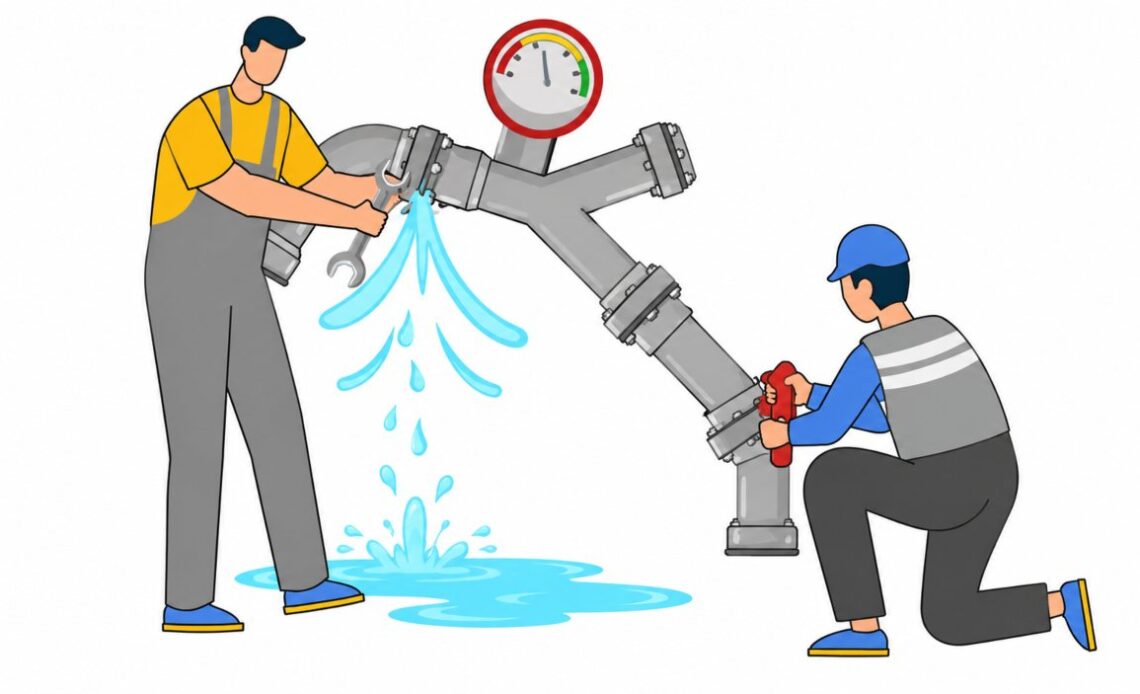
A burst pipe may seem like a straightforward household maintenance issue, but the financial consequences can extend far beyond replacing damaged plumbing. Water spreads quickly, affecting flooring, furniture, electrical systems, and structural materials. What starts as a relatively small repair can become a significant financial burden if you don’t address it promptly.
For homeowners, understanding the economics of water damage matters because repair costs aren’t always obvious right away. The speed of the initial response can affect everything from restoration expenses to how long a property remains unusable. Recognizing how these costs accumulate can help homeowners make better decisions when unexpected plumbing problems arise.
Why Time Has a Financial Value
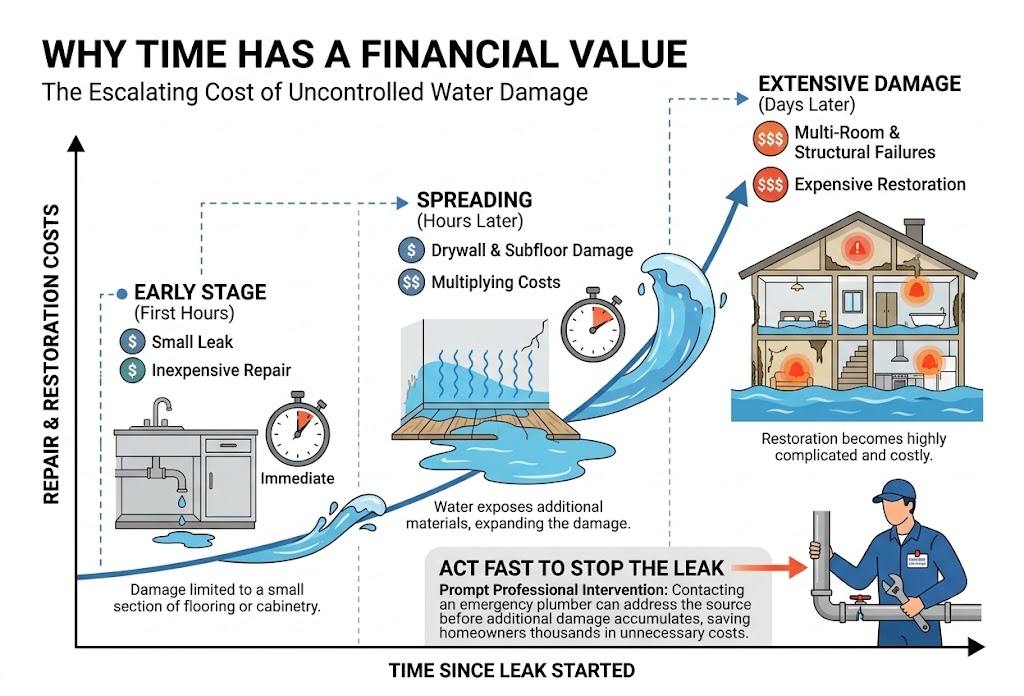
The relationship between water damage and repair costs isn’t necessarily linear. During the early stages of a leak, damage might be limited to a small section of flooring or cabinetry. As water continues to spread, however, it can expose additional materials.
A damaged kitchen pipe could initially require a relatively inexpensive repair. If water reaches the subfloor, drywall, or adjoining rooms, restoration becomes much more complicated.
This creates a financial incentive to act quickly. Every additional hour of uncontrolled water flow increases the risk of further damage, though actual costs depend on the volume of water, the leak’s location, and the materials affected.
When a serious plumbing failure occurs, contacting an emergency plumber San Diego service can help address the source of the problem before additional damage accumulates. Prompt professional intervention may reduce the required repairs and help homeowners avoid unnecessary restoration costs.
Hidden Expenses Behind Water Damage
Replacing a broken pipe is often only one component of the final bill. Depending on the severity of the incident, homeowners may face several additional expenses:
- Water extraction: Removing standing water using specialist equipment.
- Structural drying: Addressing moisture trapped beneath flooring or inside walls.
- Material replacement: Repairing damaged cabinets, drywall, insulation, or carpets.
- Temporary accommodation: Paying for somewhere else to stay if the property becomes unsafe.
- Additional inspections: Checking electrical installations or concealed structural damage.
These expenses show why the total cost of a plumbing emergency can be hard to estimate right away.
How Insurance Changes the Financial Picture
Homeowners insurance may cover certain types of sudden and accidental water damage, but coverage depends on the policy and circumstances.
A sudden pipe rupture might qualify for protection, while damage resulting from long-term neglect or gradual leakage may be excluded.
Deductibles also influence the homeowner’s final financial responsibility. Even when a claim is accepted, the policyholder may still need to contribute toward repairs.
Documenting the incident, retaining receipts, and contacting the insurer promptly can make the claims process easier to manage.
Emergency Repairs vs Preventive Maintenance
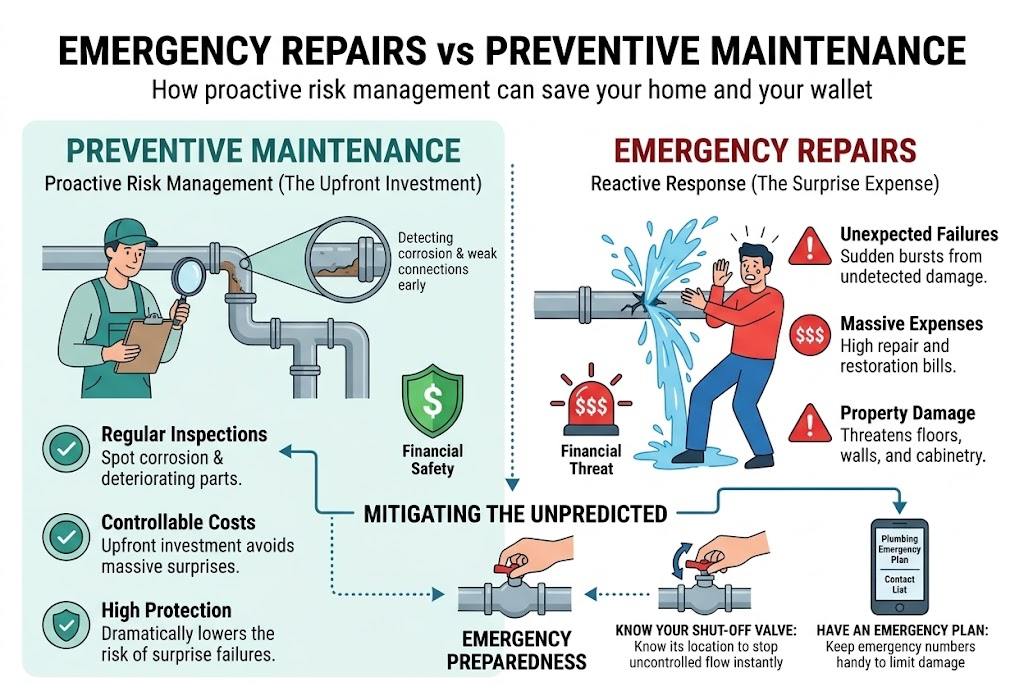
From a financial perspective, preventive plumbing maintenance represents a form of risk management. Regular inspections can identify corrosion, deteriorating connections, and other potential weaknesses before they develop into serious failures.
Although inspections require an upfront investment, they can reduce the likelihood of unexpected repair bills and property damage.
However, prevention cannot eliminate every risk. Understanding where the main water shut-off valve is located and having a plan for plumbing emergencies can also limit potential losses.
Protecting Your Property From Unexpected Costs
A burst pipe shows how quickly a routine maintenance issue can become a financial problem. The repair may be straightforward, but the resulting damage can create expenses long after the water stops flowing.
Homeowners who respond promptly, maintain appropriate insurance coverage, and invest in preventive maintenance are better positioned to manage these risks. When it comes to water damage, time isn’t simply an inconvenience. It can significantly affect the final cost of recovery.