
Residents of Dilworth, one of Charlotte’s oldest neighborhoods, often marvel at the beauty of their historic homes—Victorian facades, intricate brickwork, and century-old craftsmanship. Yet many homeowners encounter a less visible but urgent threat: cast iron sewer pipes buried beneath these vintage structures. Decades of use, combined with Charlotte’s shifting soil and humid climate, cause these pipes to deteriorate from the inside out. When cast iron pipes fail, they leak wastewater into the soil, undermining the very foundation that keeps these architectural treasures standing. Swift action to replace failing pipes is the only way to prevent foundation damage and protect the long-term value of these historic properties.
Architectural Heritage of Dilworth and Aging Plumbing Infrastructure
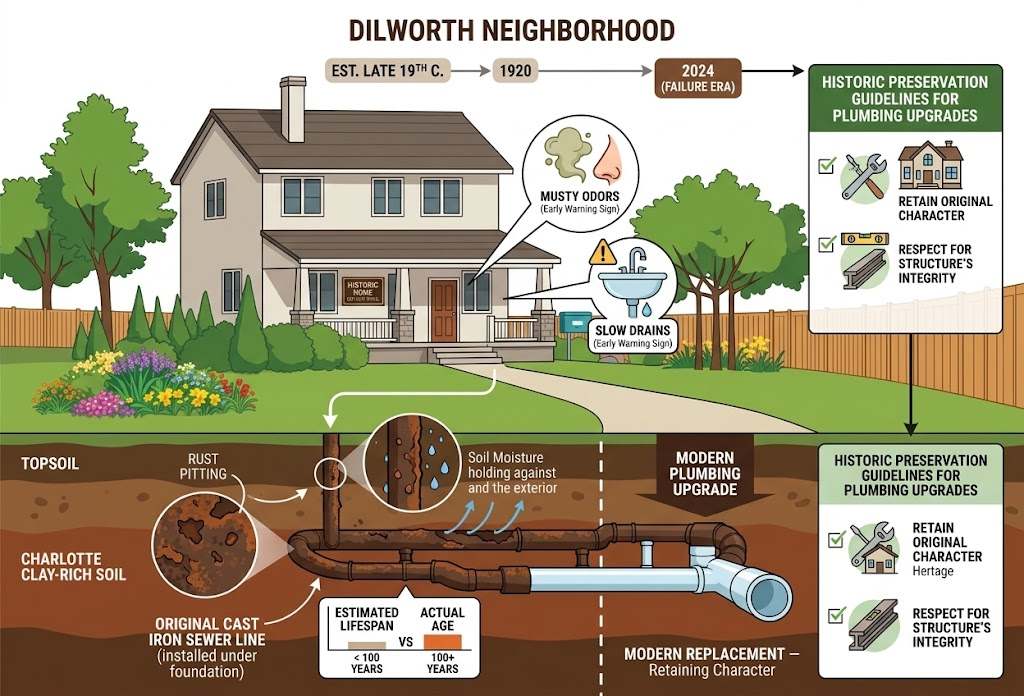
Dilworth’s neighborhoods were established in the late 19th and early 20th centuries, which means many homes still rely on the original cast iron sewer lines installed under their foundations. These pipes, while durable for their time, were never designed to last over a century. The clay-rich soil common to Charlotte can hold moisture against the exterior of cast iron pipes, accelerating the rusting process. As a result, homeowners begin to notice issues like slow drains and musty odors, which are often early warning signs of plumbing system failure in heritage homes. According to historic preservation guidelines for plumbing upgrades, retaining the original character of a home is possible when modern replacements are installed with care and respect for the structure’s integrity.
Hidden Corrosion Mechanisms in Legacy Cast Iron Drain Lines
Unlike modern plastic piping, cast iron pipes are vulnerable to both internal and external corrosion. Inside, wastewater carries organic material and cleaning chemicals that erode the pipe walls. Externally, Charlotte’s humid summers and frequent rainfall expose the pipes to moisture, further advancing rust. Over time, small pinhole leaks can develop, slowly seeping water into the soil beneath the home. This leakage is often undetected until it causes a visible problem, such as a sinking floor or cracked foundation. According to best practices for detecting sewer line failure, regular video inspections of cast iron pipes can identify hidden corrosion before catastrophic damage occurs.
Soil Erosion Dynamics Beneath Historic Charlotte Foundations
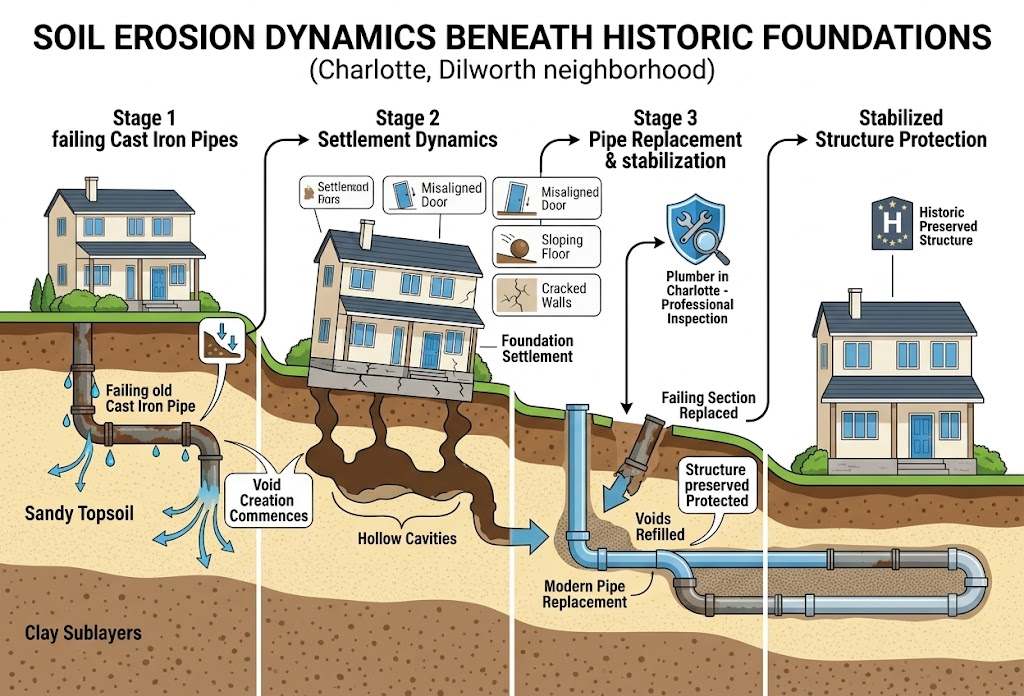
When cast iron pipes leak, water escapes directly into the soil beneath a home’s foundation. In Charlotte’s Dilworth neighborhood, the combination of sandy topsoil and clay sublayers makes the ground especially susceptible to erosion and shifting. As water accumulates under the house, it washes away fine particles, creating voids and pockets of instability. Over time, this can cause the foundation to settle unevenly or crack, leading to misaligned doors, sloping floors, and even structural failure. Homeowners who act quickly to replace failing pipes help prevent these erosion dynamics from threatening the stability of their historic homes. For those seeking a Plumber in Charlotte, professional inspections and timely pipe replacement can halt ongoing soil loss and foundation movement before repairs become drastically more expensive. After intervention, the home’s structure is better protected against future ground shifts.
Modern Trenchless Pipe Replacement Protecting Vintage Structures
Replacing cast iron sewer lines in historic homes no longer means tearing up landscaping or damaging original features. Trenchless pipe replacement technology, using techniques like pipe bursting or pipe lining, allows new pipes to be installed with minimal disruption to the property. This approach is particularly valuable for Dilworth homes, where preserving mature trees, brick walkways, and original gardens is a priority. Trenchless methods involve accessing the pipe through small entry points, leaving most of the yard and foundation untouched. New materials like high-density polyethylene (HDPE) resist future corrosion and root intrusion, offering a long-lasting solution tailored to the needs of vintage properties. With these innovations, homeowners can modernize their plumbing infrastructure while protecting the historical and aesthetic value of their residence.
Conclusion
Early detection and replacement of aging cast iron sewer pipes is the most effective way to safeguard Dilworth’s historic homes from costly foundation failure. Schedule a professional inspection at the first sign of plumbing issues to protect your property’s structure and heritage for generations to come.