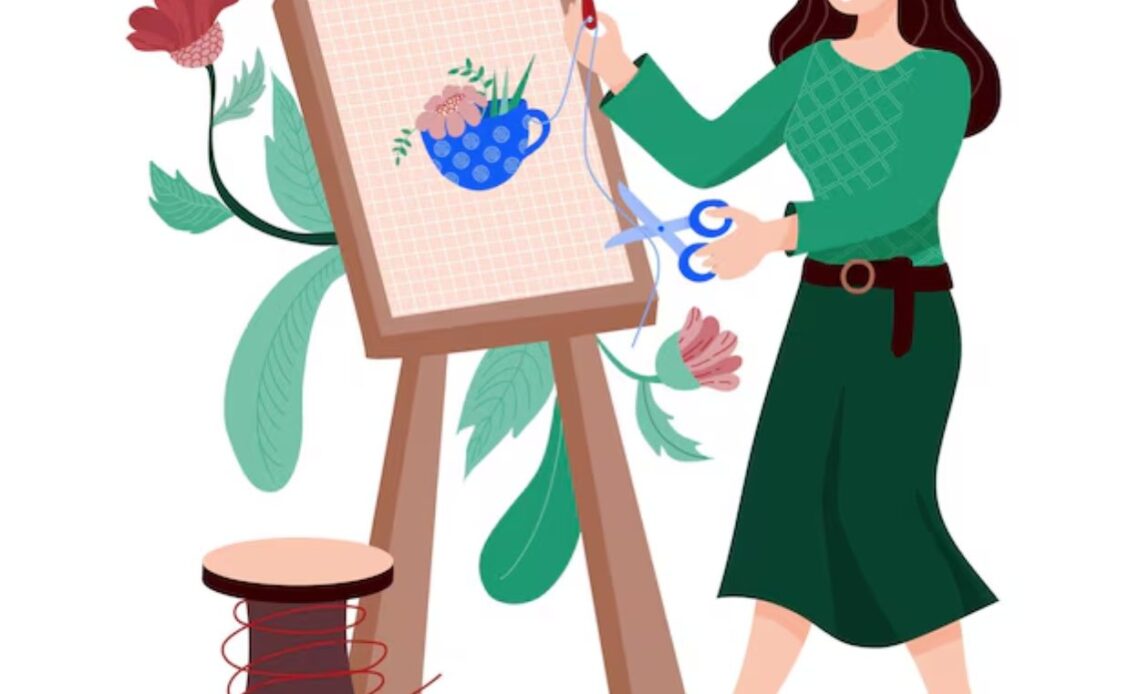
Silk art is one of the most beautiful ways to turn fabric into creative artwork. From hand-painted scarves to detailed embroidered panels, silk allows artists to create soft colors, smooth textures, and elegant designs that stand out from other materials. Because silk absorbs dye so well and has a natural shine, even simple designs can look rich and professional.
Many people think silk art is difficult or only for trained artists, but that is not true. With the right basic tools and a little practice, beginners can start creating silk artwork at home. Whether you want to paint for relaxation, decorate your home, make handmade gifts, or even sell art online, silk art offers a creative and rewarding path.
What is silk art
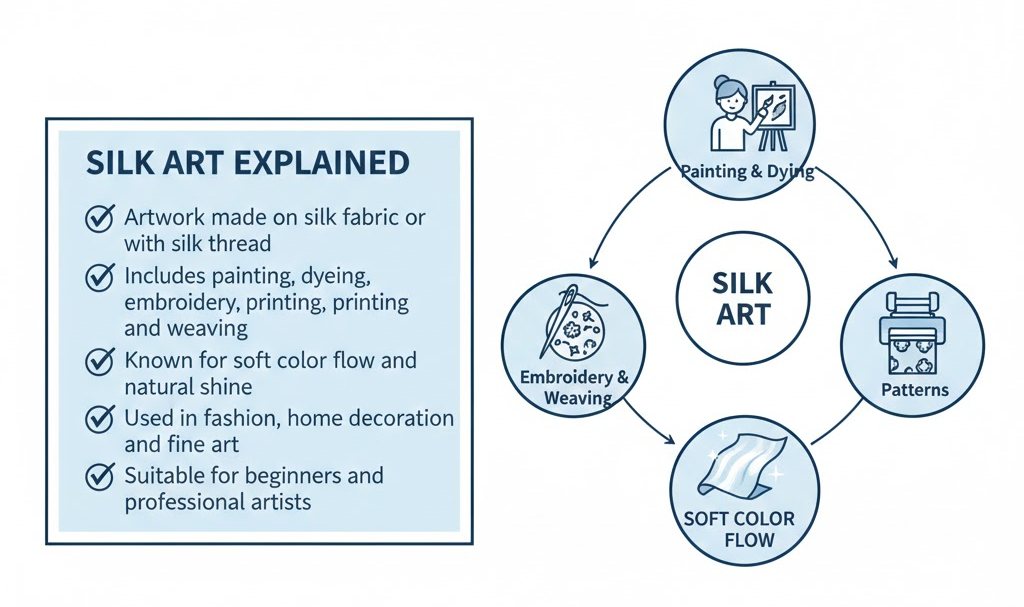
Silk art means any artwork created using silk fabric or silk thread. Artists paint on silk, dye it, stitch designs with silk thread, print patterns, or weave silk into decorative pictures. Silk is known for its smooth texture, light weight, strength, and soft natural shine. Because of these qualities, colors spread beautifully on silk, creating soft blends that are difficult to achieve on other materials.
Silk art can be used for decoration, fashion, gifts, wall art, scarves, clothing, and collectible art. Some silk art is simple and modern, while other pieces follow very old traditional techniques.
Silk art explained in simple points.
- Artwork made on silk fabric or with silk thread
- Includes painting, dyeing, embroidery, printing, and weaving
- Known for soft color flow and natural shine
- Used in fashion, home decoration, and fine art
- Suitable for beginners and professional artists
Why is silk special for art
Silk behaves differently from cotton or paper. Understanding its qualities helps artists use it better.
Main silk qualities for art
- Smooth surface helps paint move freely
- Absorbs dye deeply, giving rich colors
- Strong fibers prevent easy tearing
- Light fabric is easy to frame or wear
- Natural shine improves visual beauty
Showing silk compared with other fabrics.
| Feature | Silk | Cotton | Canvas |
|---|---|---|---|
| Surface smoothness | Very smooth | Medium | Rough |
| Color absorption | Excellent | Good | Medium |
| Natural shine | Yes | No | No |
| Weight | Very light | Medium | Heavy |
| Price level | Higher | Low | Medium |
| Best for fine detail | Yes | Sometimes | Yes |
Types of silk art
Silk art includes many methods. Each method creates a different look.
Silk painting
Silk painting uses special fabric dyes or paints applied with brushes. Colors spread softly, creating flowing designs.
Common silk painting products
- decorative scarves
- framed paintings
- clothing panels
- wall decorations
Silk painting summary points
- Uses liquid dyes or fabric paints
- Requires a stretched silk surface
- Good for nature, abstract, and floral designs
- Most beginner-friendly silk art form
Silk dyeing
Silk dyeing colors the entire fabric using dipping, tying, folding, or soaking techniques. It produces blended and abstract patterns.
Silk dyeing summary points
- Focus on fabric coloring, not detailed painting
- Often uses folding or tying methods
- Creates soft gradient or repeated patterns
- Good for scarves and fashion fabrics
Silk embroidery
Silk embroidery uses fine silk thread to stitch designs onto fabric. The thread shine gives rich detail and texture.
Silk embroidery summary points
- Uses needle and silk thread
- Can create extremely detailed artwork
- Often used for luxury decorative pieces
- Requires patience and stitching skill
Silk screen printing
Screen printing transfers patterns onto silk using a mesh screen and ink.
Silk screen printing summary points
- Good for repeating designs
- Used in fashion and mass production
- Faster than hand-painting
- Suitable for logo or pattern work
Silk weaving art
Silk weaving creates pictures during the fabric-making process by carefully arranging colored threads.
Silk weaving summary points
- One of the oldest silk arts
- Needs special loom equipment
- Highly skilled traditional craft
- Produces very durable artwork
Tools needed to start silk painting
Starting silk art is easier when you know the essential tools.
Beginner silk painting tools table
| Tool | Purpose | Beginner priority |
|---|---|---|
| Silk fabric | Base surface for painting | Essential |
| Silk dyes or paints | Provide permanent color | Essential |
| Soft brushes | Apply color smoothly | Essential |
| Wooden frame | Keeps silk tight | Essential |
| Water container | Brush cleaning and control | Essential |
| Pencil or washable marker | Sketch design | Helpful |
| Outline resist liquid | Stops color spreading | Optional |
Tools explained in easy points
Silk fabric
- Choose light silk for beginners
- Easier to control color spread
Fabric dyes
- Must be made for silk
- Normal paint may crack
Brushes
- Soft watercolor brushes work best
- One thin and one medium brush is enough
Frame
- Prevents wrinkles
- Helps keep paint even
Step-by-step beginner silk painting guide
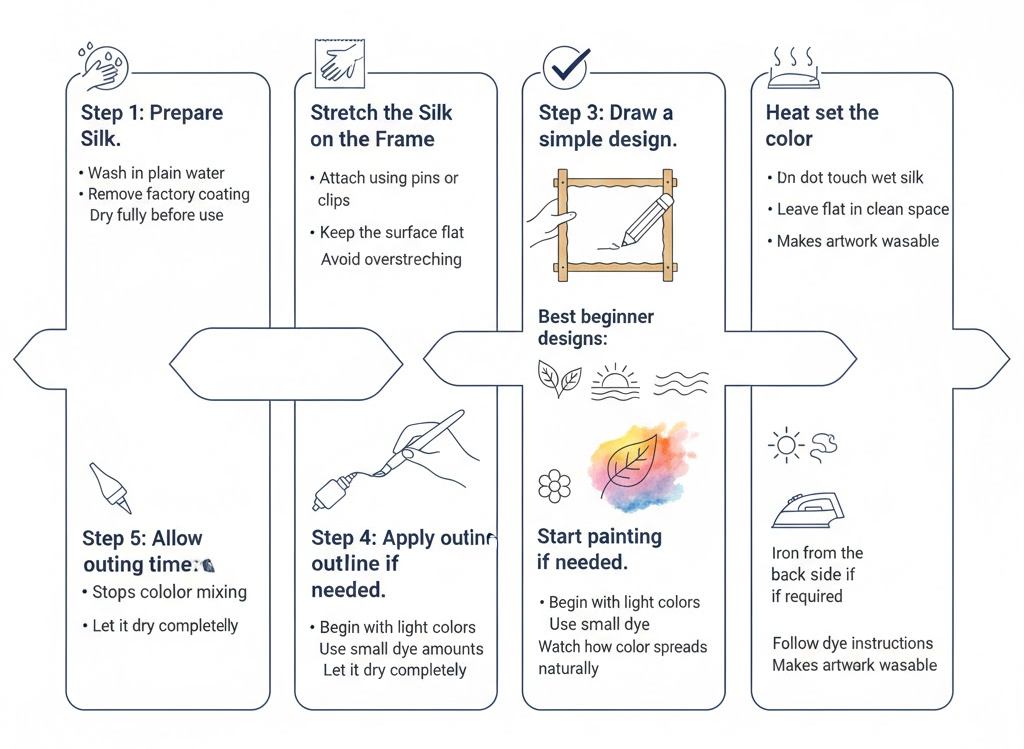
Step 1: Prepare the silk.
- Wash in plain water
- Remove factory coating
- Dry fully before use
Step 2: Stretch the silk on the frame
- Attach using pins or clips
- Keep the surface flat and tight
- Avoid overstretching
Step 3: Draw a simple design.
Best beginner designs
- leaves
- flowers
- sunset shapes
- simple abstract waves
Step 4: Apply the outline if needed.
- Use a resist liquid for borders
- Stops color mixing
- Let it dry completely
Step 5: Start painting
- Begin with light colors
- Use small dye amounts
- Watch how color spreads naturally
Step 6: Allow full drying time.
- Do not touch wet silk
- Leave the flat in a clean space
Step 7: Heat set the color
- Iron from the back side if required
- Follow dye instructions
- Makes artwork washable
Beginner-friendly silk art project ideas
Small silk practice projects
| Project | Difficulty | Why good for beginners |
|---|---|---|
| Silk bookmark | Very easy | Small size easy control |
| Greeting card silk panel | Easy | Quick finish builds confidence |
| Two color scarf | Easy | Teaches color blending |
| Mini framed silk art | Medium | Good for decoration practice |
Quick beginner ideas in points
- Paint a single flower design
- Try a two-color sunset blend
- Create abstract color waves
- Make a simple border pattern scarf
Common silk art mistakes and solutions
| Mistake | Why it happens | Solution |
|---|---|---|
| Too much dye | Beginner overloading brush | Use small drops only |
| Loose silk surface | Frame not tight | Stretch evenly |
| Complex first design | Too much ambition early | Start simple shapes |
| Muddy colors | Mixing too many shades | Use two or three colors |
Easy prevention tips
- Practice on scrap silk first
- Work slowly, not fast
- Keep the workspace clean
- Test colors before the final piece
Caring for silk artwork properly
| Care action | Recommended method |
|---|---|
| Washing | Cold water gentle hand wash |
| Drying | Air dry only |
| Ironing | Low heat from backside |
| Storage | Keep in dry clean space |
Care rules in simple points
- Never scrub silk strongly
- Avoid strong sunlight for a long time
- Do not use harsh detergents
- Store rolled in soft paper or framed
Selling silk art successfully
Silk artwork sells well online if presented properly.
Best-selling silk items
| Product type | Buyer demand level |
|---|---|
| Hand painted scarves | Very high |
| Small framed silk art | High |
| Custom name silk gifts | High |
| Large silk wall hangings | Medium |
| Silk embroidered panels | Medium |
Selling tips in points
- Take photos in natural light
- Use a plain background
- Tell the story of the handmade process
- Start with affordable items
- Offer custom color choices
Silk art in modern fashion and homes
Fashion uses
- luxury scarves
- evening dresses
- designer tops
- art jackets
Home decoration uses
- framed silk paintings
- silk cushion covers
- wall hangings
- decorative lamp shades
How long does learning silk art usually take?
Learning timeline
| Skill level | Approx time needed |
|---|---|
| Basic color control | 1 to 3 days |
| Comfortable painting | 2 to 4 weeks |
| Advanced artistic control | 6 months plus |
| Professional mastery | Several years |
Learning advice in points
- Practice small pieces regularly
- Focus on color control first
- Study nature’s color patterns
- Complete projects fully
Cost of starting silk art
Beginner cost breakdown
| Item | Cost level |
|---|---|
| Small silk fabric | Low to medium |
| Basic dye set | Medium |
| Two brushes | Low |
| Simple frame | Low |
You can begin with a small investment and upgrade later.
Benefits of learning silk art
Personal benefits
- improves patience
- builds creative confidence
- reduces stress
- develops color understanding
Professional benefits
- can sell handmade items
- useful for fashion design
- helpful for textile careers
- supports online art business
Why is handmade silk art valued highly
Handmade silk value points
- every piece unique
- shows real artist effort
- cannot be perfectly copied by machines
- often lasts many years if cared for properly
- makes meaningful personal gifts
Final thoughts
Silk art is a beautiful, creative field that combines fabric, color, texture, and personal expression. It can be simple for beginners and highly detailed for advanced artists. You do not need expensive tools or professional training to start. With one small silk piece, basic dyes, and a simple design, anyone can begin learning.
The most important thing is patience. Silk reacts quickly to color, so slow and careful work gives the best results. Over time, your control improves, your designs grow stronger, and your confidence increases.
Whether your goal is relaxation, home decoration, gift making, or starting a handmade art business, silk art offers endless possibilities for creativity and personal growth.