
Silent endometriosis involves the growth of tissue similar to the uterine lining elsewhere in the pelvis, and it typically doesn’t produce obvious symptoms. Because this tissue resembles the intrauterine lining, it is sometimes difficult for standard tests to detect and diagnose. Although an accurate diagnosis enables targeted treatment, symptoms of endometriosis can still interfere with daily activities. Here are a few tips on navigating life with silent endometriosis:
Recognizing the Symptoms
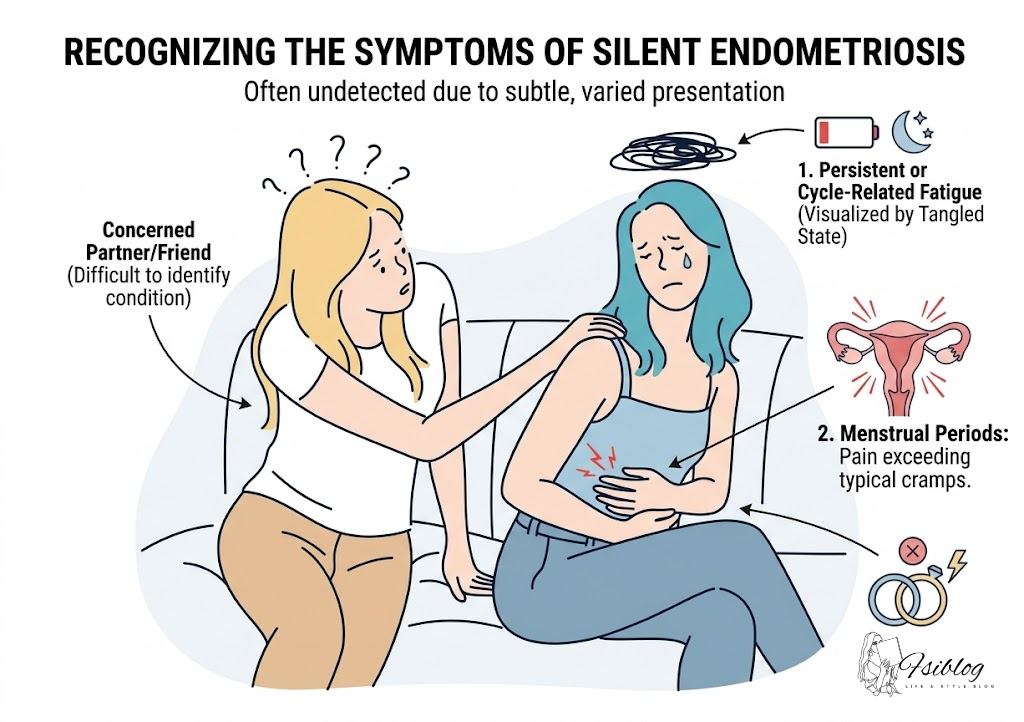
The condition can be difficult to identify because it does not always present with the classic signs of regular endometriosis. In many cases, the condition develops without severe pelvic pain or other obvious symptoms, which allows it to remain unnoticed for some time. The symptoms of silent endometriosis vary between individuals; women may have minimal or no noticeable symptoms. Other women experience symptoms such as:
- Menstrual periods that are more painful than typical cramps
- Pain during or after sexual intercourse.
- Persistent or cycle-related fatigue
Pursuing Comprehensive Evaluations
Endometriosis may not always appear during a routine pelvic exam or standard imaging review. This causes additional testing to become part of the evaluation process for individuals experiencing ongoing pelvic pain, infertility, recurrent pregnancy loss, implantation failure, or unexplained reproductive concerns. The clinician might also review an individual’s medical history; this allows them to find an accurate diagnosis.
Because symptoms often do not clearly point to a specific condition, a comprehensive evaluation helps determine whether endometriosis is the cause. Some evaluations include testing for protein markers associated with inflammation in the uterine lining linked to endometriosis. This type of testing provides clinicians with additional information when symptoms alone do not offer a clear explanation. The providers can share the results with the patient’s physician, and this allows the findings to be reviewed in a clinical setting. This supports a more informed conversation between the patient and the provider about what the results mean and what steps to take.
Exploring Medical Treatment
Management of this condition includes several clinical approaches depending on symptoms, severity, and individual patient needs. Healthcare providers may use hormone-based therapies as part of a broader treatment plan. These therapies help regulate or suppress hormonal activity associated with endometrial tissue changes. Hormone suppression approaches include medications such as gonadotropin-releasing hormone (GnRH) agonists or antagonists; these treatments help to alter hormonal signaling that influences the menstrual cycle. The provider could discuss this option as part of the symptom management strategies.
Some plans include progesterone-based therapies; these help address hormonal imbalance and endometrial tissue activity. Treatment planning may involve a combination of medical therapies and ongoing clinical monitoring. The fertility specialist adjusts treatment approaches based on symptom response and the patient’s history over time.
Managing Long-Term Reproductive Health
Silent endometriosis can affect fertility, even when it does not cause obvious symptoms. Understanding whether endometriosis is present becomes a part of long-term reproductive planning. Identifying endometriosis-related inflammation early supports more informed conversations with a healthcare provider about fertility options; this includes exploring whether assisted reproductive technologies or hormonal treatments align with the patient’s goals. Clinical discussions also include fertility procedures such as intrauterine insemination (IUI) and in vitro fertilization (IVF). This can be beneficial for patients experiencing implantation failure, recurrent pregnancy loss, or unexplained infertility associated with endometriosis-related inflammation.
Finding a Specialist
Qualified healthcare providers are able to make recommendations for a regional or local endometriosis specialist. Fertility specialists help patients understand silent endometriosis better, including which treatment options are available. Some specialists provide a test that detects endometriosis by confirming if BCL6 is present; this is a biomarker that detects the presence of inflammation. A test positive for BCL6 means that there is a high chance that endometriosis will be found through further evaluations, such as laparoscopic surgery. This information supports managing the symptoms associated with this condition.
Learn More About Silent Endometriosis
Follow-up assessment is often part of continued care when symptoms persist or remain unexplained. It allows your healthcare providers to track clinical changes and determine whether additional investigation is warranted within an established evaluation pathway. This type of layered review supports a structured approach to understanding whether endometriosis-related inflammation remains a clinical focus during ongoing care. Book a consultation with a qualified doctor to explore options for navigating life with silent endometriosis.
Disclaimer
This information is for general educational purposes only and should not replace professional medical advice, diagnosis, or treatment. Silent endometriosis, infertility, pelvic pain, and hormone-related conditions require evaluation by a licensed healthcare provider. Patients should speak with a gynecologist, fertility specialist, or qualified medical professional before starting, stopping, or changing any treatment, medication, hormonal therapy, supplement, or fertility procedure.
References
- World Health Organization. (2025). Endometriosis. World Health Organization Fact Sheet. Published October 15, 2025. Accessed May 31, 2026.
- National Institute for Health and Care Excellence. (2024). Endometriosis: Diagnosis and Management. NICE Guideline NG73. Published September 6, 2017. Last updated November 11, 2024. Last reviewed September 2, 2025. London: National Institute for Health and Care Excellence.
- Becker, C. M., Bokor, A., Heikinheimo, O., Horne, A., Jansen, F., Kiesel, L., King, K., Kvaskoff, M., Nap, A., Petersen, K., Saridogan, E., Tomassetti, C., van Hanegem, N., Vulliemoz, N., Vermeulen, N., ESHRE Endometriosis Guideline Group, & Maas, J. (2022). ESHRE guideline: endometriosis. Human Reproduction Open, 2022(2), hoac009. doi: 10.1093/hropen/hoac009
- Allaire, C., Bedaiwy, M. A., & Yong, P. J. (2023). Diagnosis and management of endometriosis. Canadian Medical Association Journal, 195(10), E363-E371. doi: 10.1503/cmaj.220637
- American College of Obstetricians and Gynecologists. (2026). Diagnosis of Endometriosis. Clinical Practice Guideline. Washington, DC: American College of Obstetricians and Gynecologists. Published March 2026. Accessed May 31, 2026.
- American College of Obstetricians and Gynecologists. (2010). Practice Bulletin No. 114: Management of endometriosis. Obstetrics & Gynecology, 116(1), 223-236. doi: 10.1097/AOG.0b013e3181e8b073
- Practice Committee of the American Society for Reproductive Medicine. (2012). Endometriosis and infertility: A committee opinion. Fertility and Sterility, 98(3), 591-598. doi: 10.1016/j.fertnstert.2012.05.031
- Zondervan, K. T., Becker, C. M., & Missmer, S. A. (2020). Endometriosis. The New England Journal of Medicine, 382(13), 1244-1256. doi: 10.1056/NEJMra1810764
- Taylor, H. S., Kotlyar, A. M., & Flores, V. A. (2021). Endometriosis is a chronic systemic disease: Clinical challenges and novel innovations. The Lancet, 397(10276), 839-852. doi: 10.1016/S0140-6736(21)00389-5
- Nezhat, C., Rambhatla, A., Miranda-Silva, C., Asiaii, A., Nguyen, K., Eyvazzadeh, A., & Agarwal, S. (2020). BCL-6 overexpression as a predictor for endometriosis in patients undergoing in vitro fertilization. JSLS: Journal of the Society of Laparoscopic & Robotic Surgeons, 24(4), e2020.00064. doi: 10.4293/JSLS.2020.00064